In today’s digital workplace, harassment often leaves a trail. One of the most powerful forms of proof is a text message, which can document behavior that might otherwise go unreported or denied. If you’ve received inappropriate or unwanted texts from a coworker or supervisor, those messages may serve as crucial evidence in a sexual harassment case under Oregon law.
At Meyer Employment Law, we help employees understand their rights, preserve digital evidence, and hold employers accountable for unlawful conduct. This article explains how text messages can be used to prove harassment, what counts as valid evidence, and what steps you should take to protect your claim.
Also Read:
Oregon Employment Harassment
Oregon Sexual Harassment: Know Your Rights in the Workplace
Navigating Hostile Work Environments

Understanding Sexual Harassment Under Oregon Law
Sexual harassment occurs when an employee is subjected to unwelcome sexual advances, comments, or conduct that creates a hostile or intimidating work environment. Under Oregon law, harassment can take two main forms:
- Quid Pro Quo Harassment: When job benefits (like raises or promotions) are conditioned on sexual favors or acceptance of inappropriate behavior.
- Hostile Work Environment: When repeated or severe conduct interferes with an employee’s ability to work comfortably or safely.
The Oregon Bureau of Labor and Industries (BOLI) and the Equal Employment Opportunity Commission (EEOC) enforce laws that protect employees from sexual harassment. These laws also prohibit retaliation against workers who report misconduct.
Understanding how Oregon defines harassment helps determine whether digital communications can be used to prove illegal behavior.
Why Text Messages Matter as Evidence
Not all harassment happens in person. In many modern workplaces, inappropriate behavior occurs through text messages, emails, social media, and chat apps.
Text messages are particularly valuable as evidence because they:
- Provide direct proof: Unlike verbal comments, texts are written records that show exactly what was said.
- Include timestamps and context: They establish when the harassment occurred and whether it was part of a recurring pattern.
- Capture tone and frequency: Repeated, suggestive, or aggressive messages can reveal the nature and persistence of the behavior.
What Counts as Evidence
Not all messages will qualify as harassment, but examples that often support a claim include:
- Explicit or suggestive messages that make the recipient uncomfortable.
- Repeated romantic advances or sexual jokes, especially after being asked to stop.
- Threats or retaliatory comments, such as “you’ll regret this” after rejecting advances.
- Patterns of behavior showing consistent, unwanted attention.
Digital proof like this can demonstrate intent, show a history of misconduct, and strengthen your credibility when filing a claim.
When presented properly, text messages can transform a “he said, she said” situation into clear, verifiable evidence of harassment.

How to Preserve Text Message Evidence
Once you suspect harassment, preserving your messages is essential. Deleting or modifying them can make it harder to prove your case later.
Here’s how Oregon employees can protect digital evidence effectively:
- Save everything: Do not delete or edit messages, even if they’re upsetting.
- Take screenshots: Capture full conversations, including timestamps and sender names.
- Back up data: Use cloud storage or email backups in case your phone is lost or replaced.
- Document the context: Note when and where the messages were received, and whether there were any witnesses.
Maintaining Authenticity
Courts and agencies like BOLI require proof that text messages haven’t been altered. Your attorney may help:
- Retrieve records directly from your phone carrier.
- Use forensic tools to verify message authenticity.
- Maintain a clear chain of custody to prevent disputes.
Proper evidence handling protects your case and demonstrates honesty, consistency, and credibility.
What Other Evidence Supports a Sexual Harassment Claim
While text messages are powerful, combining them with other documentation creates a stronger case. Additional supporting evidence can include:
- Witness statements from coworkers who observed the behavior.
- Emails or chat logs that show similar communication patterns.
- HR complaints or incident reports, proving you took formal steps.
- Performance reviews or demotions, if retaliation occurred after reporting harassment.
A discrimination lawyer in Oregon can analyze your situation and determine how these pieces fit together to demonstrate harassment or retaliation.
Conclusion for Section:
A complete record of evidence helps prove both the conduct and its impact on your employment.
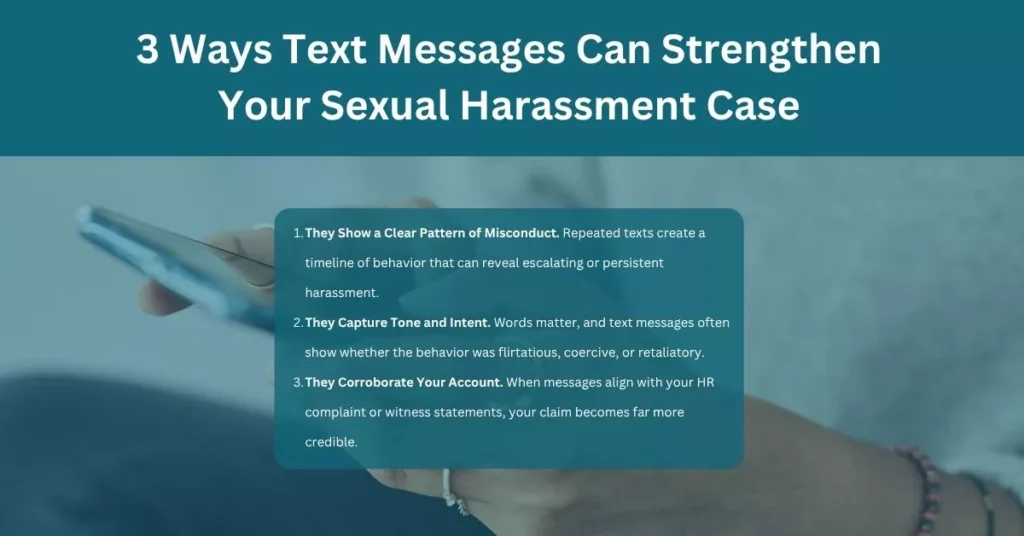
3 Ways Text Messages Can Strengthen Your Sexual Harassment Case
Text messages can make or break a sexual harassment claim. Here are three key reasons they matter under Oregon employment law:
- They Show a Clear Pattern of Misconduct
Repeated texts create a timeline of behavior that can reveal escalating or persistent harassment. - They Capture Tone and Intent
Words matter, and text messages often show whether the behavior was flirtatious, coercive, or retaliatory. - They Corroborate Your Account
When messages align with your HR complaint or witness statements, your claim becomes far more credible.
If you’ve received inappropriate messages from a coworker or manager, don’t delete them. Preserve them first, and consult an employment law lawyer in Oregon right away.
How an Oregon Employment Lawyer Can Help
Sexual harassment cases involving digital evidence require strategic handling. A lawyer can:
- Evaluate the messages to confirm they meet legal definitions of harassment.
- File complaints with BOLI or the EEOC within Oregon’s deadlines.
- Negotiate settlements or pursue litigation if needed.
- Protect against retaliation, ensuring you remain safe and supported at work.
Meyer Employment Law has deep experience representing Oregon workers who’ve faced harassment, discrimination, and retaliation. Our attorneys know how to present text messages and other digital records effectively to strengthen your claim.
With an experienced advocate, you can ensure your evidence is preserved, your voice is heard, and your rights are protected.
Conclusion
Text messages can be some of the most compelling evidence in an Oregon sexual harassment case. They provide an unfiltered look into conduct that might otherwise be denied or minimized.
If you believe you’ve been harassed through digital messages at work, take action quickly: preserve the evidence, document the context, and reach out to a trusted employment law lawyer in Oregon for help.
Contact Meyer Employment Law today to schedule a consultation. We’ll help you understand your rights and take the next step toward accountability and justice.
FAQs
Can I use text messages as evidence of sexual harassment in Oregon?
Yes. Oregon courts and BOLI accept text messages as valid evidence if they are authentic and relevant.
What if I deleted the messages?
A lawyer may help recover deleted messages or subpoena records from your phone provider.
Do screenshots count as evidence?
Yes, as long as they’re complete, unedited, and include context such as timestamps and sender information.
Should I respond to harassing texts?
Not necessarily. Often it’s safer not to engage and to report the conduct to HR or a lawyer instead.
How long do I have to file a claim?
Typically within 300 days through BOLI or EEOC, but acting sooner helps preserve your rights and strengthen your claim.
About the Author
Meyer Employment Law is a Portland-based law firm dedicated to protecting Oregon workers from workplace harassment, discrimination, retaliation, and wrongful termination. Learn more about our team and services on our About us page.