Getting hurt on the job is stressful enough without worrying about whether your employer will support your recovery. Oregon’s workers’ compensation system exists to provide medical care and wage replacement when employees suffer work‑related injuries.
Unfortunately, some employers punish injured workers for filing claims or for requesting reinstatement after recovery. Workers’ comp retaliation is unlawful. This article explains Oregon’s reinstatement statute, what counts as retaliation after a workplace injury, and how to protect your rights if your employer fires or demotes you after you get hurt.
Read More:
- Fired for Using Sick Leave in Oregon? Your Wrongful Termination Rights
- Can You Be Retaliated Against for Reporting Harassment? An Oregon Employee Guide
- Oregon Labor & Employment Laws: What You Need to Know
Your Right to Reinstatement Under Oregon Law
Oregon law requires certain employers to return injured workers to their jobs once they are able to perform the duties. ORS 659A.043 mandates that an employer with 21 or more employees must reemploy a worker who sustains a compensable injury if the worker makes a timely demand. The employer must reinstate the worker to their former position if it exists and the worker is capable of performing it.
If the original job no longer exists or is not available, the employer must offer the worker the first available and suitable position. A suitable position is one that is as close as possible to the worker’s former job in terms of wages, benefits, and duties.
The reinstatement right can terminate under specific circumstances:
- A medical determination shows the worker is permanently unable to perform the duties of the former position.
- The worker refuses modified work or fails to respond to the employer’s bona fide offer of suitable work.
- The worker accepts an offer of suitable employment with another employer.
- More than seven days elapse after the worker receives written notice from the insurer or self‑insured employer that the worker’s attending physician has released them for employment.
If the employer violates this statute by failing to reinstate the worker, it constitutes an unlawful employment practice. The worker can file a complaint with BOLI or pursue a civil action for reinstatement, back pay, and other damages.

Administrative Rules Clarify Employer Duties
The Oregon Administrative Rules provide further guidance. OAR 839‑006‑0130 explains that employers with 21 or more employees must reinstate workers once they are able to perform the duties of their former job.
If the job is unavailable, the employer must offer the first available suitable position that is similar in compensation and duties. The rule also states:
- The worker must make a written or verbal demand for reinstatement.
- A certificate from a physician or nurse practitioner is considered prima facie evidence that the worker can perform the job duties.
- If the employer has two or more suitable jobs available, the worker must be offered the job that most closely approximates the former position.
These rules ensure that employers cannot simply avoid bringing an injured worker back by claiming the position has been eliminated or by offering an inferior job.
What Counts as Workers’ Comp Retaliation?
Retaliation occurs when an employer takes adverse action against an employee for filing a workers’ compensation claim, requesting medical treatment, or seeking reinstatement. Examples include:
- Terminating or Demoting – Firing a worker for reporting an injury or reducing their job duties or pay when they request accommodation.
- Refusing to Rehire – Failing to return a worker to their previous job even though they are medically cleared to do so.
- Harassment or Hostile Treatment – Subjecting the worker to insults, threats, or unfair discipline after they file a claim.
- Reducing Hours or Benefits – Cutting hours, denying overtime, or stripping benefits as punishment for filing a claim.
Oregon’s retaliation laws protect employees from these actions. BOLI notes that it is illegal for employers to retaliate against workers who report unsafe or illegal activity, and that employees must file a retaliation complaint within one year of the discriminatory act.
The same principle applies to workers’ compensation claims: employers cannot punish workers for exercising their right to benefits and reinstatement.
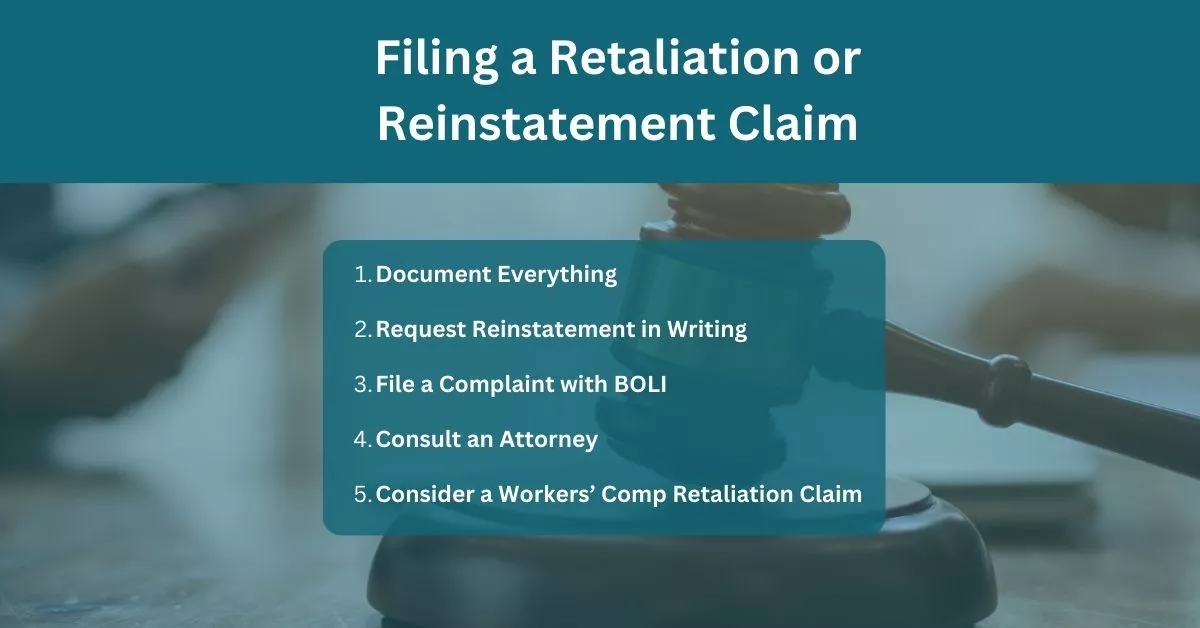
Filing a Retaliation or Reinstatement Claim
If you believe your employer has retaliated against you after a workplace injury or refused to reinstate you, you have options. Here is what to do:
- Document Everything – Keep records of your injury, workers’ compensation claim, medical releases, and any communication with your employer. Note any changes in your job duties, pay, or treatment after you filed the claim.
- Request Reinstatement in Writing – Once your physician releases you to return to work, make a formal demand for reinstatement. Include the date, your job title, and attach the medical release. A written demand is strong evidence that you sought reinstatement.
- File a Complaint with BOLI – The Oregon Bureau of Labor and Industries handles reinstatement and retaliation complaints. You generally have one year from the discriminatory act to file. BOLI can investigate and seek remedies such as reinstatement, back pay, and penalties.
- Consult an Attorney – If the employer denies your reinstatement or retaliates, contact an employment attorney experienced in workers’ compensation laws. You may file a civil lawsuit for wrongful termination, discrimination, or retaliation. Remedies can include reinstatement, lost wages, punitive damages, and attorney fees.
- Consider a Workers’ Compensation Retaliation Claim – Oregon law allows workers to sue for damages if they are fired or discriminated against for filing a claim. The lawsuit may be separate from the workers’ compensation case. An attorney can help coordinate both claims.
Other Legal Protections for Injured Workers
Workers’ compensation is not the only law protecting injured employees. The Family and Medical Leave Act (FMLA)and Oregon Family Leave Act (OFLA) provide job‑protected leave for workers recovering from serious injuries or caring for family members. These laws prohibit employers from interfering with or retaliating against employees for taking leave.
If an employer denies leave or penalizes an employee for taking it, the employee may have additional claims for FMLA interference or discrimination.
Employers with 25 or more workers must also provide reasonable accommodations under the Americans with Disabilities Act (ADA) and Oregon disability laws. If your injury results in a disability, your employer must engage in an interactive process to determine a reasonable accommodation, such as modified duties or schedule adjustments.
When Should You File a Lawsuit?
Not every workplace dispute requires litigation, but certain situations warrant filing a lawsuit:
- Failure to Reinstate – Your employer refuses to return you to your former position or a comparable job despite a doctor’s release and your written demand.
- Termination or Demotion – You are fired or demoted after filing a workers’ compensation claim or requesting reinstatement.
- Retaliatory Harassment – You experience ongoing harassment or hostile treatment following your injury or claim.
- Violation of Multiple Laws – Your employer denies you leave under FMLA/OFLA, fails to accommodate your disability, and refuses to reinstate you. Multiple violations may support a strong legal case.
In these cases, speak to a knowledgeable employment attorney. They can evaluate whether your employer’s actions violate ORS 659A.043, OAR 839‑006‑0130, or other laws. Remedies may include reinstatement, back pay, damages for emotional distress, and possibly punitive damages if the employer’s conduct was particularly egregious.
Conclusion
Workers injured on the job deserve support, not punishment. Oregon law requires large employers to reinstate employees who can perform their duties and prohibits retaliation for filing workers’ compensation claims. Administrative rules clarify that a physician’s certificate is strong evidence of an employee’s ability to return to work.
If your employer refuses to rehire you, demotes you, or harasses you after you file a claim, document everything and file a complaint with BOLI.
Consider speaking to an employment attorney at Meyer Employment Law about filing an unfair dismissal after injury at work lawsuit. Protecting your rights ensures that you and other workers can recover from injuries without fear of retaliation.
For more information on wrongful termination and workplace rights, visit our wrongful termination services page.