
Quid pro quo sexual harassment in Oregon occurs when someone with workplace power pressures an employee to accept sexual conduct, provide sexual favors, or tolerate unwanted sexual behavior in exchange for job benefits or to avoid workplace consequences.
Meyer Employment Law represents Oregon employees in sexual harassment, workplace harassment, retaliation, and discrimination cases. If you are dealing with harassment at work, our Oregon employment harassment team can help you understand your options.
Quid pro quo harassment can be direct, such as a supervisor saying an employee must go on a date to receive a promotion. It can also be more subtle, such as a manager implying that rejecting sexual advances will lead to worse shifts, fewer hours, discipline, or termination.
Read More:
- Sexual Harassment: Know Your Rights in the Workplace
- Retaliation for Reporting Harassment in Oregon
- What to Do If Your Boss Harasses You: Oregon Employee Guide
- Employer Liability for Coworker Harassment in Oregon
- Sexually Harassed at Work? Know the Signs and What to Do Next
TL;DR
Quid pro quo sexual harassment means “this for that.” In the workplace, it usually happens when a supervisor, manager, owner, or someone with influence over employment decisions connects job benefits or job consequences to sexual conduct.
In Oregon, this may include pressure to go on a date, tolerate sexual comments, engage in sexual conduct, or accept unwanted advances to keep a job, receive a promotion, avoid discipline, get better shifts, or maintain favorable treatment. Employees should document what happened, save evidence, report carefully when appropriate, and consider speaking with an Oregon sexual harassment lawyer.
Key Takeaways
- Quid pro quo sexual harassment can happen when workplace benefits or consequences are tied to sexual conduct.
- The harasser is often someone with authority, such as a supervisor, manager, executive, owner, or someone who influences scheduling, pay, discipline, promotions, or job assignments.
- A threat does not always have to be explicit. Implied pressure, repeated advances, or sudden negative treatment after rejection may matter.
- Employees should preserve texts, emails, screenshots, schedules, performance reviews, complaints, witness names, and termination or discipline records.
- Retaliation for rejecting sexual advances or reporting harassment may create additional legal claims.
 What Does Quid Pro Quo Sexual Harassment Mean?
“Quid pro quo” means “this for that.” In a workplace sexual harassment case, it generally refers to a situation where an employment benefit or employment consequence is linked to sexual conduct.
Oregon BOLI explains that quid pro quo harassment typically involves a supervisor giving or withholding employment benefits based on an employee’s willingness to grant sexual favors.
Quid pro quo harassment may involve promises, threats, pressure, or retaliation. The key issue is whether a person with workplace power is using that power to seek sexual conduct or punish someone for refusing it.
Examples of Quid Pro Quo Sexual Harassment in Oregon
Quid pro quo sexual harassment can happen in many industries, including restaurants, healthcare, retail, construction, professional offices, education, hospitality, and government workplaces.
Examples may include:
- A supervisor says an employee will get a promotion only if they go on a date.
- A manager threatens to cut an employee’s hours after the employee rejects sexual advances.
- An owner implies that continued employment depends on tolerating sexual comments or touching.
- A supervisor gives better shifts to employees who flirt with them or accept sexual attention.
- A manager threatens discipline after an employee refuses to send sexual photos.
- A supervisor says they can “make things easier” if the employee agrees to meet privately outside work.
- An employee is demoted, written up, transferred, or fired soon after rejecting sexual conduct.
These examples do not cover every possible situation. Quid pro quo harassment can be obvious or subtle. What matters is whether sexual conduct is connected to workplace benefits, threats, or decisions.
Who Can Commit Quid Pro Quo Harassment?
Quid pro quo harassment usually involves someone with actual or practical power over the employee’s job. That person may be able to affect the employee’s pay, position, schedule, workload, discipline, promotion opportunities, or continued employment.
The harasser may be:
- A supervisor
- A manager
- An owner
- An executive
- A department lead
- A person who controls scheduling
- A person who influences discipline or promotion decisions
- Someone the employer allows to exercise authority over workers
A coworker may also create harassment issues, but quid pro quo claims often focus on power. If the person making sexual demands can affect your job, their conduct may be especially serious.
Is Quid Pro Quo Harassment Illegal in Oregon?
Yes. Sexual harassment is a form of unlawful workplace discrimination. Oregon employees may have protections under Oregon law and federal law when they experience quid pro quo sexual harassment at work.
Federal law also prohibits sex-based workplace harassment under Title VII when the employer is covered by federal anti-discrimination law. The EEOC provides guidance on sexual harassment and filing discrimination charges.
What If the Harasser Never Directly Says “Do This or You’re Fired”?
Quid pro quo harassment does not always involve a direct threat. Sometimes the pressure is implied through timing, comments, authority, or changes in treatment.
For example, an employee may reject a supervisor’s advances and then suddenly receive worse shifts, unfair discipline, reduced hours, exclusion from opportunities, or a poor performance review. Those facts may raise questions about whether the employer or supervisor punished the employee for refusing sexual conduct.
Subtle pressure can still be serious. A supervisor’s “jokes,” repeated invitations, private messages, or comments about helping an employee’s career may become evidence when paired with job consequences or threats.
What Evidence Helps Prove Quid Pro Quo Sexual Harassment?
Quid pro quo harassment cases often depend on evidence showing the connection between sexual conduct and workplace benefits or consequences.
Helpful evidence may include:
- Text messages, emails, direct messages, or voicemails
- Screenshots of sexual comments, requests, or threats
- Schedules before and after rejection
- Pay records showing reduced hours or lost income
- Performance reviews before and after the harassment
- Discipline notices
- Promotion or transfer records
- HR complaints or internal reports
- Witness names and contact information
- Notes showing dates, times, locations, and what was said
- Termination, demotion, or resignation documents
Employees should save evidence as soon as possible. If important information is stored in a work account, access may disappear quickly after discipline, termination, or resignation.
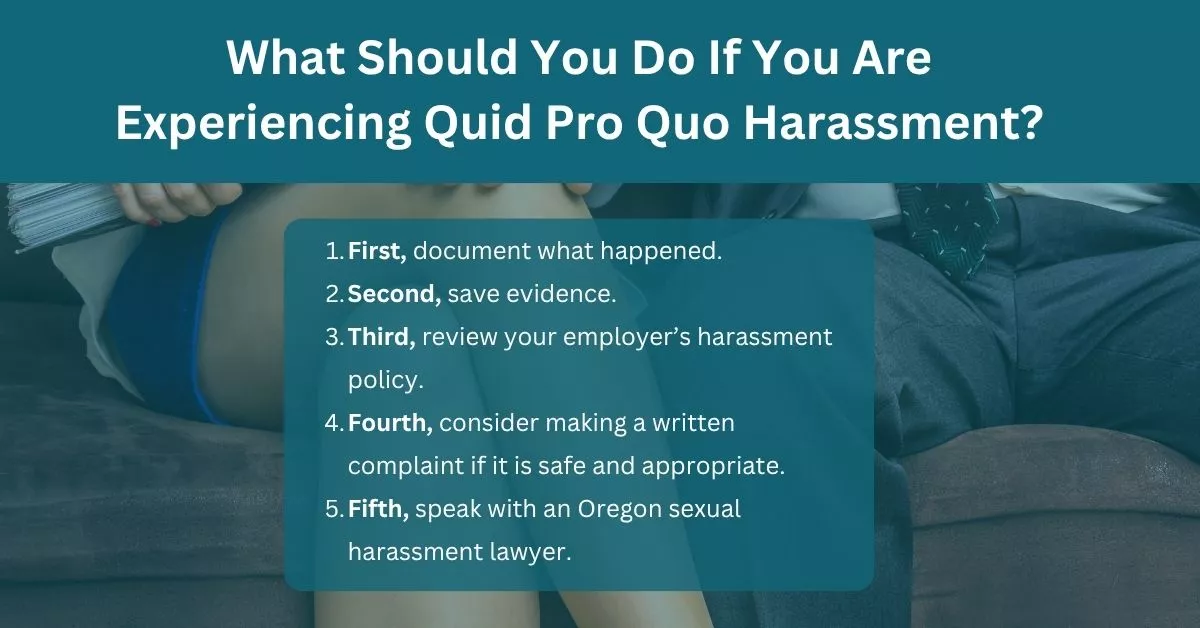 What Should You Do If You Are Experiencing Quid Pro Quo Harassment?
If you are experiencing quid pro quo harassment, try to protect your safety, your job, and your legal rights at the same time.
First, document what happened. Write down dates, locations, names, witnesses, and the exact words or actions involved.
Second, save evidence. Keep screenshots, messages, emails, schedules, reviews, complaints, and any documents showing changes in treatment.
Third, review your employer’s harassment policy. Many employers have a handbook, HR process, reporting hotline, or alternate reporting option if the harasser is your supervisor.
Fourth, consider making a written complaint if it is safe and appropriate. A written complaint can help show that the employer knew about the harassment.
Fifth, speak with an Oregon sexual harassment lawyer before signing anything, resigning, or missing a filing deadline.
Should You Report Quid Pro Quo Harassment to HR?
In many cases, reporting harassment to HR or another designated person can help create a record and give the employer a chance to stop the conduct. However, reporting internally may not always be simple or safe.
You may want legal advice before reporting if the harasser is an owner, executive, HR representative, or supervisor with major control over your job. Legal advice may also be important if you have already reported harassment and nothing changed, if you were threatened, or if you are being pressured to resign or sign a severance agreement.
If you do report internally, a written complaint is often stronger than a verbal complaint. Keep a copy of anything you submit and save any response from the employer.
Can You File a Complaint With BOLI or the EEOC?
Yes. Oregon employees may be able to file a workplace discrimination or harassment complaint with the Oregon Bureau of Labor and Industries. BOLI’s Civil Rights Division handles complaints involving workplace discrimination, harassment, and retaliation.
Employees may also be able to file a charge with the Equal Employment Opportunity Commission. The EEOC enforces federal workplace discrimination laws, including laws prohibiting sexual harassment.
What Is Retaliation After Rejecting Quid Pro Quo Harassment?
Retaliation happens when an employer punishes an employee for rejecting sexual advances, reporting harassment, participating in an investigation, or opposing unlawful conduct.
Retaliation may include termination, demotion, discipline, reduced hours, worse shifts, exclusion from opportunities, increased scrutiny, threats, hostile treatment, or pressure to resign.
If retaliation happens, document the change in treatment immediately. Retaliation may become a separate legal claim in addition to the original harassment claim.
What If You Were Fired After Rejecting Sexual Advances?
Being fired after rejecting sexual advances may be a serious red flag. The timing, the employer’s stated reason, your prior work history, and the decision-maker’s conduct may all matter.
For example, a termination may deserve closer review if you had positive performance reviews before rejecting advances, if the employer changed its explanation, if discipline suddenly appeared after the rejection, or if the person you rejected influenced the termination decision.
How Long Do You Have to File a Quid Pro Quo Harassment Complaint in Oregon?
Deadlines depend on the claims, the employer, where you file, and whether state or federal law applies.
Oregon BOLI states that, for discrimination at work, employees may have up to five years to file a complaint or lawsuit if the incidents happened on or after September 29, 2019.
Federal EEOC deadlines may be shorter. The EEOC explains that workers generally must file a charge within 180 calendar days, though the deadline may extend to 300 days when a state or local agency enforces a law prohibiting employment discrimination on the same basis.
Because filing deadlines can affect your rights, do not wait to get advice.
Common Mistakes to Avoid
Employees facing quid pro quo harassment are often under pressure and may not know what to do next. Try to avoid these common mistakes:
- Deleting messages or screenshots
- Making only verbal complaints with no written record
- Waiting too long to seek legal advice
- Quitting without understanding how resignation may affect your claim
- Signing a severance agreement without review
- Keeping evidence only on a work device
- Posting about the situation on social media
- Ignoring retaliation after reporting
- Missing BOLI or EEOC filing deadlines
You do not need to handle the process alone. Sexual harassment cases can involve sensitive facts, power imbalances, strict deadlines, and retaliation risks.
 Talk to an Oregon Sexual Harassment Lawyer
Quid pro quo sexual harassment in Oregon can threaten your income, job security, reputation, and emotional well-being. When someone uses workplace power to pressure you for sexual conduct, you may have legal rights.
Meyer Employment Law represents Oregon employees in workplace harassment, sexual harassment, discrimination, retaliation, hostile work environment, and wrongful termination cases.
If you are experiencing quid pro quo harassment at work, contact Meyer Employment Law to discuss your rights and next steps.
About the Author
Robert Meyer is the founder of Meyer Employment Law and has represented employees in Oregon state and federal courts for more than a decade in workplace disputes, including sexual harassment, quid pro quo harassment, hostile work environment, retaliation, discrimination, wrongful termination, wage claims, severance agreements, and leave violations. The firm helps workers understand their rights, evaluate their legal options, and pursue accountability when employers violate Oregon and federal employment laws.


