
Federal and state family‑leave laws were designed to ensure that employees can take time off for serious health conditions, childbirth, or family care without losing their job. The Family and Medical Leave Act (FMLA) is a federal law that entitles eligible employees to up to 12 weeks of unpaid, job‑protected leave with continuation of group health insurance. In Oregon, the Oregon Family Leave Act (OFLA) and Paid Leave Oregon provide additional leave benefits and protect employees from discrimination or retaliation for taking leave. When your employer denies or discourages you from taking leave, it may be considered FMLA interference: a serious violation of your rights. This guide explains what constitutes interference, how state and federal laws intersect, and what steps you should take if your FMLA leave is denied.
Read More:
- Fired for Using Sick Leave in Oregon? Your Wrongful Termination Rights
- Unlawful Termination Due to Maternity Leave in Oregon: Insights from Meyer Employment Law
- Oregon Labor & Employment Laws: What You Need to Know
Understanding Your FMLA Rights
The FMLA applies to employers with 50 or more employees within a 75‑mile radius. To qualify, an employee must have worked for the employer for at least 12 months and logged at least 1,250 hours during the preceding year. Qualifying reasons for FMLA leave include:
- The employee’s own serious health condition.
- The birth of a child or placement of a child through adoption or foster care.
- To care for a spouse, child, or parent with a serious health condition.
- Exigencies related to a family member’s active duty military service.
When granted, FMLA leave is unpaid but job‑protected. Employers must continue the employee’s group health benefits and return them to their same or an equivalent position when the leave ends. This means that employers cannot demote or terminate an employee for taking leave and cannot use FMLA leave as a negative factor in employment decisions.
Protections Against Interference and Retaliation
Section 105 of the FMLA makes it unlawful for any employer to interfere with, restrain, or deny the exercise of FMLA rights. Examples of interference include:
- Failing to notify employees of their FMLA rights.
- Refusing or delaying approval of FMLA leave.
- Discouraging employees from taking leave or asking them to delay leave for business reasons.
- Requiring employees to work while on leave or calling them back to work prematurely.
- Counting FMLA leave against an employee in attendance policies or using it to deny promotions or raises.
The FMLA also prohibits retaliation. Employers cannot discipline, demote, or terminate an employee for requesting or taking FMLA leave. Retaliatory acts include reducing hours, giving negative performance reviews, reassigning the employee to a less desirable position, or harassing the employee to discourage future leave.

Oregon’s Paid Leave and Family Leave Laws
Oregon provides its own protections that supplement federal law. Paid Leave Oregon allows eligible employees to take up to 12 weeks of paid leave to care for a new child, a serious health condition, or to address domestic violence or sexual assault.
Workers who experience pregnancy or childbirth‑related conditions can receive two additional weeks of paid leave.
To be covered, employees must have earned at least $1,000 in the year prior to their leave and worked for their employer for at least 90 consecutive days for job protection. Paid Leave Oregon is an insurance program funded by employer and employee contributions and administered by the state.
The Oregon Family Leave Act (OFLA) applies to employers with 25 or more employees and protects workers who have been employed at least 25 hours per week for 180 days. OFLA provides up to 12 weeks of unpaid, job‑protected leave for many of the same reasons as the FMLA, including parental leave, serious health condition leave, bereavement leave, and sick child leave.
Like the FMLA, employers must return employees to their former or equivalent position after leave and cannot discriminate or retaliate against employees for using their leave.
State vs. Federal Leave: Which Applies?
Because the FMLA, Paid Leave Oregon, and OFLA may cover the same leave, employees should know how the laws interact. In general:
- FMLA & OFLA concurrently: If both the FMLA and OFLA apply, the leave periods run at the same time; an employee does not receive 12 weeks under each law separately. However, OFLA may provide additional leave that is not covered by the FMLA, such as bereavement or sick child leave. Employers must inform employees when a leave counts against their FMLA or OFLA entitlement.
- Paid Leave Oregon benefits can be taken concurrently with FMLA or OFLA. Employees can receive paid benefits through the state insurance program while the leave counts toward their federal or state entitlement.
While FMLA leave is unpaid, Paid Leave Oregon offers wage replacement. If an employer denies your FMLA leave but you qualify for Paid Leave Oregon or OFLA, you may still be entitled to job protection and benefits under state law. That is why consulting an FMLA attorney experienced in Oregon law is crucial.
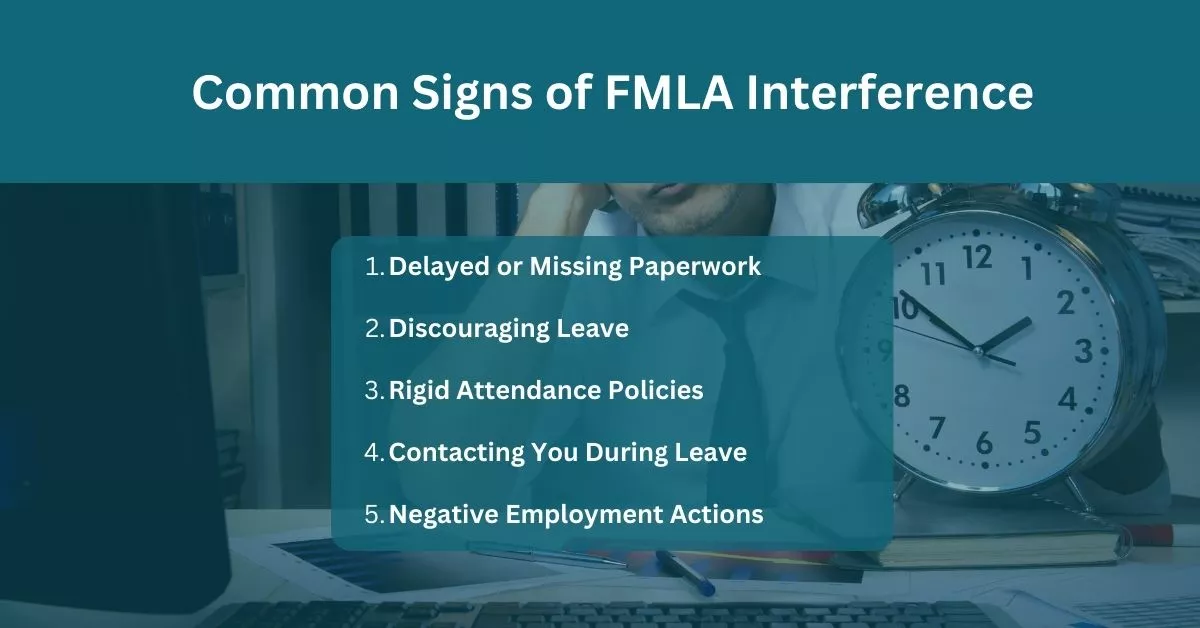
Common Signs of FMLA Interference
Recognizing interference is the first step toward protecting your rights. Watch for the following red flags:
- Delayed or Missing Paperwork: Employers must provide employees with a “Notice of Eligibility and Rights & Responsibilities” and a designation notice. Delayed notices may signal interference.
- Discouraging Leave: Supervisors telling you the timing isn’t convenient or pressuring you not to take leave is prohibited.
- Rigid Attendance Policies: Counting FMLA absences toward “no‑fault” attendance policies or discipline violates the law.
- Contacting You During Leave: Requiring you to work or be constantly available undermines your leave. While employers can occasionally request status updates, they cannot demand you perform work.
- Negative Employment Actions: Demotion, pay cuts, termination, or unfavorable assignments after taking leave may constitute retaliation.
What to Do When Your Leave Is Denied
If your employer refuses your FMLA request or interferes with your rights, take these steps:
1. Review the Policy and Document Everything
Obtain a copy of your employer’s FMLA policy and confirm whether you meet the eligibility requirements. Keep a detailed journal of all interactions concerning your leave: dates, times, people involved, and what was said.
Retain copies of medical certifications, emails, and any communications regarding your leave request. Documentation helps demonstrate interference or retaliation.
2. Ask for Clarification in Writing
Ask your employer, in writing, why your leave was denied. Was it due to insufficient hours worked, or did they misclassify your eligibility? Request a written explanation of the denial and the specific information they claim is missing. This documentation will be valuable if you need to file a complaint.
3. File a Complaint with the U.S. Department of Labor
The Wage and Hour Division of the Department of Labor (DOL) enforces the FMLA. You can file a complaint with the DOL if you believe your rights were violated. The DOL can investigate your employer and order reinstatement, payment of lost wages, and other remedies.
There is generally a two‑year statute of limitations to bring an FMLA interference claim (three years for willful violations). The DOL website explains that employers may not interfere with, restrain, or deny FMLA rights, so referencing this source can strengthen your claim.
4. Explore Oregon State Remedies
In Oregon, employees have additional options. Paid Leave Oregon and OFLA provide administrative remedies through the Oregon Bureau of Labor and Industries (BOLI). BOLI’s Civil Rights Division enforces laws prohibiting discrimination and retaliation and can investigate interference with leave rights.
On its Paid Leave Oregon Protections page, BOLI states that employers cannot discriminate or retaliate against employees for applying for or taking paid leave. Workers who believe their Paid Leave rights were denied can file a complaint with BOLI.
5. Consider Bringing a Lawsuit
Employees denied their leave or retaliated against may pursue a civil lawsuit in federal or state court. Remedies may include reinstatement, back pay, lost benefits, liquidated damages (which double lost wages for willful violations), and attorney fees.
In Oregon, the Workplace Fairness Act gives employees up to five years to bring certain discrimination and retaliation claims, but FMLA claims have shorter deadlines. An experienced FMLA attorney can evaluate your case, preserve evidence, and represent you in negotiations or litigation.
6. Plan Your Return
If you ultimately take FMLA leave, plan for your return. Employers must restore you to your job or an equivalent position with the same pay, benefits, and working conditions. If your employer tries to change your role or compensation, consult an attorney immediately. Keep records of any job changes after returning from leave as evidence of retaliation.
Frequently Asked Questions
What qualifies as an FMLA interference claim? Any employer action that interferes with, restrains, or denies your right to take FMLA leave is interference. This includes discouraging leave, failing to respond to leave requests, delaying or misclassifying leave, or using FMLA leave as a negative factor in employment actions.
Can my employer require me to take PTO instead of FMLA? Employers may require employees to use accrued paid time off concurrently with FMLA leave, but they cannot deny FMLA leave altogether. If you qualify for Paid Leave Oregon, you may receive wage replacement without using all your PTO.
What if I don’t meet the FMLA requirements? You may still qualify for leave under Oregon’s OFLA or Paid Leave Oregon programs. These programs have different eligibility thresholds and may provide job protection and wage replacement. Check your employer’s policies and speak with a lawyer.
How long do I have to file a complaint? FMLA interference claims must generally be filed within two years (three years for willful violations). BOLI complaints for Paid Leave Oregon or retaliation must be filed within one year. Because deadlines vary, consult an attorney promptly.
Conclusion
Being denied medical or family leave can jeopardize your health and livelihood. The FMLA, OFLA, and Paid Leave Oregon exist to ensure that employees can balance work and family responsibilities without losing their job. If your employer refuses to grant leave or retaliates against you for requesting it, you have legal recourse.
Document every interaction, seek clarification, and file complaints with the DOL or BOLI if necessary.
Because leave laws can be complex, consult an FMLA attorney who understands federal and Oregon regulations. The attorneys at Meyer Employment Law help employees protect their rights and reclaim their jobs. For more information on wrongful termination and harassment claims, visit our wrongful termination services page.


