Every worker has the right to a safe workplace. Yet injuries and deaths continue to occur when employers cut corners on safety or expect employees to work in hazardous conditions. In Oregon, state law and federal regulations protect employees from being forced to perform dangerous tasks.
If you believe your working conditions pose an imminent threat, you may have the right to refuse the work, and your employer cannot retaliate against you for doing so. This article explains the legal framework behind the right to refuse unsafe work, steps to take if you face a dangerous assignment, and when you should contact an attorneyabout an unsafe work environment lawsuit.
Read More:
- Oregon Independent Contractor Laws: What Workers and Businesses Must Know
- Navigating Hostile Work Environments
- Oregon Labor & Employment Laws: What You Need to Know
Your Right to a Safe Workplace
Under the Oregon Safe Employment Act(ORS 654.062) and Oregon OSHAregulations, employers must provide workplaces free from recognized hazards that can cause death or serious physical harm.
The Oregon Occupational Safety and Health Administration enforces these standards and investigates complaints. Additionally, the federal Occupational Safety and Health Act (OSH Act)requires employers nationwide to furnish a workplace free from serious hazards (29 U.S.C. § 654).
Employees have the right to:
- Receive training and information about workplace hazards.
- Request OSHA inspections if they believe the workplace is unsafe.
- Access medical and exposure records.
- Report injuries and unsafe conditions without fear of retaliation.
- Refuse to perform work that would expose them to imminent danger under certain conditions.

When Can You Refuse Dangerous Work?
Both Oregon and federal law recognise that workers should not be forced to choose between their safety and their job. However, the right to refuse dangerous work is not unlimited; workers must follow specific steps and criteria.
According to Oregon OSHA’s fact sheet on Workers’ Right to Refuse Dangerous Work, employees can refuse hazardous assignments when all of the following are true:
- The employee asked the employer to correct the hazard, and the employer failed or refused to do so.
- The employee genuinely believesthat performing the task would pose a risk of death or serious injury. The belief must be in good faith.
- A reasonable personwould agree that the hazard is so serious that it creates an imminent danger.
- There is not enough time to eliminate the hazardthrough regular enforcement channels, such as filing a complaint with OSHA or BOLI.
The federal OSHA guidanceechoes similar requirements: workers must first ask the employer to fix the hazard, refuse in good faith, and remain at work until ordered to leave if the employer does not address the danger. If all conditions are met, the refusal is protected.
Examples of Dangerous Work Refusals
- A construction worker notices that scaffolding lacks guardrails and the supervisor refuses to install them. The worker refuses to climb the scaffolding, believing it is a fall hazard. A reasonable person would agree that working on unguarded scaffolding is dangerous.
- A warehouse employee is told to clean a chemical spill without protective equipment. They ask the supervisor for proper gear, but the supervisor tells them to “just get it done.” The worker refuses due to the risk of chemical burns or inhalation.
- A truck driver is assigned to operate a vehicle with faulty brakes. After reporting the problem to management and being told to drive anyway, the driver refuses because the risk of collision is clear.
In each of these scenarios, the worker asked the employer to correct the hazard, believed in good faith that serious injury or death could occur, and there wasn’t time to seek an inspection.
Steps to Take if You Encounter Dangerous Work
If you find yourself in a hazardous situation, follow these steps to protect your safety and legal rights:
- Report the Hazard– Tell your supervisor about the dangerous condition and request that it be corrected. Document your conversation: note the date, time, who you spoke with, and what was said.
- Refuse in Good Faith– If the hazard is not corrected, inform your supervisor that you cannot perform the task because you believe it poses a serious risk. Remain at the worksite until ordered to leave or the hazard is fixed.
- Contact OSHA or Oregon OSHA– File a complaint with Oregon OSHA (for state‑regulated industries) or federal OSHA (for federal jurisdiction) as soon as possible. Provide details about the hazard and the employer’s response. OSHA will keep your identity confidential upon request.
- File a BOLI Complaint– Oregon’s Bureau of Labor and Industries (BOLI) handles retaliation complaints. The agency notes that it isillegal for employers to retaliate against employeesfor reporting unsafe conditions or exercising safety rights and that workers must file a complaint within one year of the discriminatory act. Retaliation could include firing, demotion, reduced hours, or harassment.
- Consult an Attorney– If you suffer retaliation or injury due to unsafe conditions, contact an unsafe work environment attorney. You may have a claim for wrongful termination, workers’ compensation retaliation, or negligence. An attorney can help evaluate whether you can pursue damages or reinstatement.
Understanding Retaliation Protections
Oregon law safeguards employees who refuse dangerous work. The Oregon OSHA fact sheet explains that employer retaliation for refusing dangerous work or filing a complaint is illegal and that employees have one year to file a complaint with BOLI.
Federal law provides similar protection; OSHA instructs workers to contact the agency within 30 daysof a retaliatory action to file a whistleblower complaint. Remedies may include reinstatement, back pay, and compensatory damages.
Documenting Retaliation
If your employer retaliates, keep a written record of events. Document changes in your job duties, hours, pay, or performance evaluations. Note any comments that suggest the employer’s actions are in response to your refusal or complaint. This evidence will support your claim when filing a retaliation complaint or lawsuit.
Workers’ Compensation and Unsafe Work Conditions
Workers who are injured due to unsafe conditions may be eligible for workers’ compensation benefits, including medical expenses, wage replacement, and permanent disability benefits. Oregon law prohibits employers from discriminating against or firing workers who file workers’ compensation claims. Employees who are fired or disciplined after an injury should seek legal advice about a workers’ compensation retaliation claim.
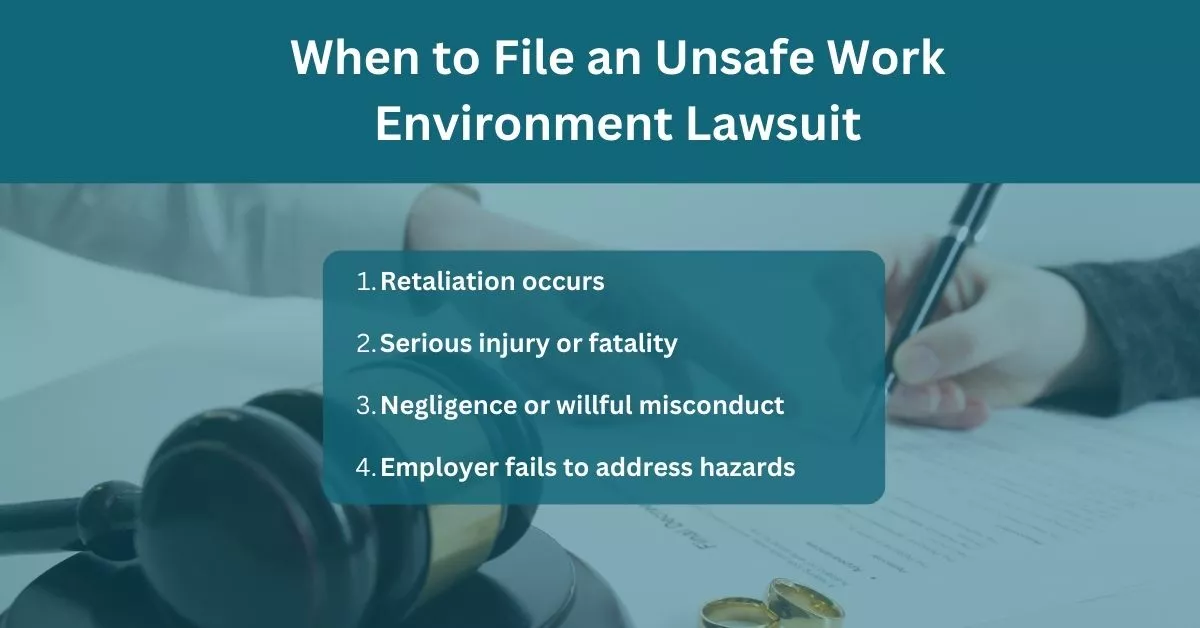
When to File an Unsafe Work Environment Lawsuit
In some situations, refusing dangerous work and filing safety complaints may not be enough to correct the issue or remedy the harm. Employees may consider litigation when:
- Retaliation occurs: The employer fires or demotes you for refusing dangerous work.
- Serious injury or fatality: You or a coworker is injured because of an uncorrected hazard.
- Negligence or willful misconduct: The employer knowingly violated safety standards or ignored repeated complaints.
- Employer fails to address hazards: Even after OSHA citations or BOLI complaints, the employer continues to ignore safety rules.
Depending on the circumstances, potential legal claims may include wrongful termination, negligence, intentional infliction of emotional distress, or actions under Oregon’s whistleblower and safety statutes. Consult an attorney experienced in workplace safety and employment law to discuss the appropriate course of action.
Practical Tips for Staying Safe
- Know Your Rights– Familiarize yourself with the safety policies in your employee handbook and the Oregon OSHA guidelines. Attend any safety training offered.
- Report Early– Don’t wait for a minor hazard to become a serious threat. Promptly report unsafe conditions.
- Don’t Sign Away Your Rights– Some employers require waivers or policies that discourage reporting hazards. These documents may not be enforceable and could violate the law.
- Support Coworkers– Encourage others to speak up when they notice unsafe practices. Collective action can prompt change more quickly.
- Keep Records– Maintain your own written log of hazards, complaints, and management responses. This can be essential evidence if a dispute arises.
Conclusion
Unsafe working conditions endanger employees and expose employers to liability. Oregon and federal laws give workers the right to refuse work that could cause serious injury or death, as long as specific steps are followed.
If your employer fails to correct a hazard and retaliates when you raise concerns, you can file complaints with OSHA and BOLI. Document everything and seek legal counselif necessary. Protecting your safety is not just your right, it’s the law.
For more information on your retaliation rights and how we can help at Meyer Employment Law, visit our employment retaliation services page.