An unemployment denial can feel final, but in Oregon it is often the start of an appeals process where facts and documentation matter. This guide explains what unemployment representation looks like in real life, what a lawyer does at each stage, and how to prepare for a hearing.
Getting denied unemployment benefits is frustrating. It is also common. In Oregon, when the Employment Department reduces or denies benefits, it issues a decision and you can request a hearing through the appeals process. If your employer appeals an approval, you may still end up in the same process.
Read more:
- Not Getting Paid on Time? Oregon Late Paycheck Laws Explained
- Oregon Employment Wage Claims: Employee Rights to Collect Unpaid Wages
- Employee Rights to Meal and Rest Breaks in Oregon
- How to Handle Unfair Treatment at Work
Start by checking whether wages or classification issues are driving the denial
Before you focus only on the unemployment decision, it is worth stepping back and asking whether the denial is connected to wage records, pay practices, or classification issues. Many disputes start because the wage history is incomplete, the separation pay is misreported, or a worker was treated as a contractor even though the job functioned like employment. Those details can affect both eligibility and benefit amounts.
If pay problems are part of your situation, it may help to review how Oregon wage claims work and what records matter under Oregon employment wage claims.
A lawyer providing unemployment representation will often look at wage documentation early, because it can change the way the unemployment case should be framed and what evidence needs to be gathered.
What unemployment representation means
Unemployment representation is legal help focused on getting benefits approved or defended through an administrative process. In Oregon, appeal hearings are handled through the Office of Administrative Hearings (OAH). A lawyer is not only showing up and talking. Strong unemployment representation includes preparation like litigation: theory, elements, evidence, witnesses, and a clean timeline.
Representation can help at four points:
- Before you appeal (diagnosing the real reason for the denial)
- After you appeal but before the hearing (building the record and evidence)
- At the hearing (testimony, cross examination, objections, and argument)
- After the hearing (review options and overpayment disputes)
Step 1: A lawyer translates the denial into a winnable issue
Denial notices are often written in agency language. The first job of unemployment representation is identifying what the agency is actually deciding.
Common denial categories include:
- Misconduct (employer claims you violated a rule)
- Voluntary quit (agency believes you left without good cause)
- Able and available (agency believes you were not ready to accept work)
- Work search issues (weekly requirements)
- Wage record problems and identity issues
A lawyer will identify what you must prove, then match that to the evidence that exists. This matters because unemployment hearings are focused. You win by proving the specific issue, not by telling every unfair thing that happened.
Step 2: A lawyer protects deadlines and files the appeal correctly
Deadlines matter, and you generally have 20 days from the date on the denial notice to appeal, unless you can show good cause for a late appeal.
A lawyer handling unemployment representation typically:
- Files the appeal properly and confirms it was received
- Identifies the exact decision being appealed
- Preserves proof of filing
- Helps avoid written statements that accidentally create new issues
 Step 3: A lawyer builds a hearing record before the hearing date
This is where most cases are won. Many claimants assume the hearing is a casual conversation. It is not. It is an evidence event.
Document collection and organization
Unemployment representation often involves collecting:
- Attendance records and schedules
- Performance reviews and write ups
- Policies the employer claims you violated
- Emails and texts showing context, instructions, or inconsistencies
- Medical notes where illness or restrictions are part of the issue
- Witness names and contact info
- Pay stubs and wage records when the benefit amount is wrong
Case theory and preparation
A lawyer will build a simple theory that matches the legal issue.
Examples:
- If misconduct is alleged, the focus is often policy clarity, intent, and consistency of enforcement.
- If voluntary quit is alleged, the focus is often good cause and whether reasonable alternatives were tried.
- If able and available is alleged, the focus is what restrictions existed and whether you were actually able to accept work.
Testimony preparation
Good testimony is clean and specific. A lawyer will help you practice:
- A short explanation of what happened
- How to answer without guessing
- How to describe documents so they become part of the record
- How to avoid volunteering facts that create additional issues
Step 4: A lawyer handles the hearing like a trial
Oregon’s unemployment appeals process routes hearings through OAH with an administrative law judge. Employers often bring HR witnesses who testify frequently, so preparation matters.
At the hearing, unemployment representation typically includes:
Direct testimony and exhibits
- Presenting your story in the right order
- Introducing documents and making sure the judge has them
- Calling witnesses when helpful
Cross examination of the employer
This is where many cases turn.
Cross examination can expose:
- Shifting reasons for separation
- Lack of firsthand knowledge
- Missing documentation
- Unequal enforcement of rules
- Timeline problems
Keeping it focused
A lawyer keeps the hearing tied to the legal elements and avoids distractions that do not help eligibility.
Step 5: A lawyer addresses overpayments and penalties
Some workers receive benefits and later get an overpayment notice. Representation can include:
- Reviewing the overpayment basis
- Challenging the underlying decision
- Requesting waiver options when available
- Building evidence that the error was not the claimant’s fault
Step 6: A lawyer helps you decide what happens next
After the hearing, you receive a written decision. If the outcome is unfavorable, additional review options may exist. Oregon’s Employment Appeals Board provides information about the appeals structure.
At this stage, a lawyer helps you decide:
- Whether review is realistic based on the record
- Whether the problem was evidence, credibility, or law
- Whether a wage claim, retaliation claim, or other employment claim should be prioritized
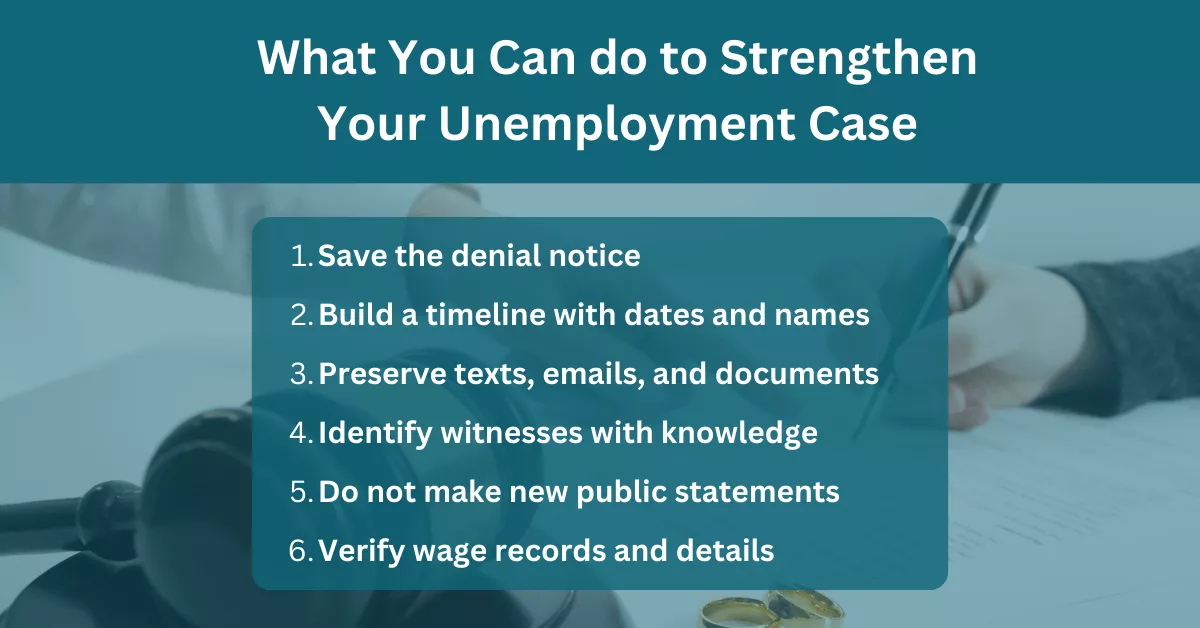 What you can do now to strengthen your unemployment case
Even before formal unemployment representation, these steps usually help:
- Save the denial notice and all attachments
- Build a timeline with dates and names
- Preserve texts, emails, and policy documents
- Identify witnesses with firsthand knowledge
- Do not make new public statements about the dispute
- Verify wage records and classification details if the numbers look wrong
Conclusion
Unemployment representation is not just showing up to a hearing. It is a structured process: diagnosing the denial issue, protecting deadlines, building evidence, preparing testimony, and presenting a focused case before an administrative law judge. In Oregon, the hearing is your opportunity to create a clear record.
If wages, classification, or pay records are part of the problem, those issues often belong in the same evidence file. That is why it can be useful to understand how wage disputes are handled while you prepare your unemployment appeal.
FAQs
How long do I have to appeal an unemployment denial in Oregon?
Oregon Law Help states you generally have 20 days from the date on the denial notice to appeal, unless you can show good cause.
Who conducts unemployment appeal hearings in Oregon?
Oregon refers unemployment appeal hearings to the Office of Administrative Hearings.
What does a lawyer actually do at the hearing?
Unemployment representation includes presenting testimony, introducing exhibits, cross examining the employer, and keeping the hearing focused on the legal elements.
Can wage problems affect unemployment benefits?
Yes. Missing or incorrect wage records can change benefit amounts, and classification disputes may affect eligibility.
Do I need a lawyer for unemployment representation?
Not always, but representation can be helpful when the employer is contesting aggressively, the facts are complex, or the case involves misconduct, quit issues, or overpayments.
How Meyer Employment Law Can Help
Meyer Employment Law is a Portland based firm focused on representing Oregon employees in workplace matters. Our attorneys help workers navigate disputes involving unpaid wages, retaliation, wrongful termination, workplace harassment, and employment related claims that arise when a job ends unexpectedly, including unemployment appeals and related documentation issues.
If you want to learn more about the firm’s approach and the types of cases we handle, you can explore our main site at Meyer Employment Law. For background on the attorneys and the firm’s employee focused practice, visit our About page, where we share more about our team and mission.
If you have questions about your situation or want to discuss next steps confidentially, you can reach out through our contact form to request a consultation.