Reporting illegal activity at work can be the right thing to do, but it can also trigger retaliation. This guide explains when to hire a whistleblower lawyer, how an Oregon attorney protects you before and after you report misconduct, and what to do if your employer punishes you for speaking up.
Whistleblowing can feel like stepping into uncertainty. You might know something is wrong, but you are not sure how to report it without risking your job, your reputation, or your future career options. In Oregon, many employees are protected when they make a good faith report of unlawful conduct, and retaliation is prohibited.
Oregon’s Bureau of Labor and Industries explains that whistleblowing protections can apply even if the report is not ultimately substantiated, as long as the employee had a good faith belief when reporting.
Read More:
- Whistleblowing in the Workplace: What Oregon Employees Should Know
- Retaliation for Reporting Harassment in Oregon: Know Your Rights
- Unsafe Work Environments in Oregon: Your Right to Refuse
- How to Report Workplace Discrimination in Oregon (Step by Step)
Start with the retaliation framework Oregon uses
Before deciding whether you need a whistleblower lawyer, it helps to understand the legal category these cases usually fall under. Most whistleblower cases are retaliation cases at their core.
Meyer Employment Law’s overview of Oregon employment retaliation claims explains the types of situations that can qualify, including retaliation for reporting misconduct, safety concerns, or unlawful activity.
That broader retaliation framework matters because it shapes how your lawyer evaluates the facts, what evidence you should preserve, and which deadlines apply.
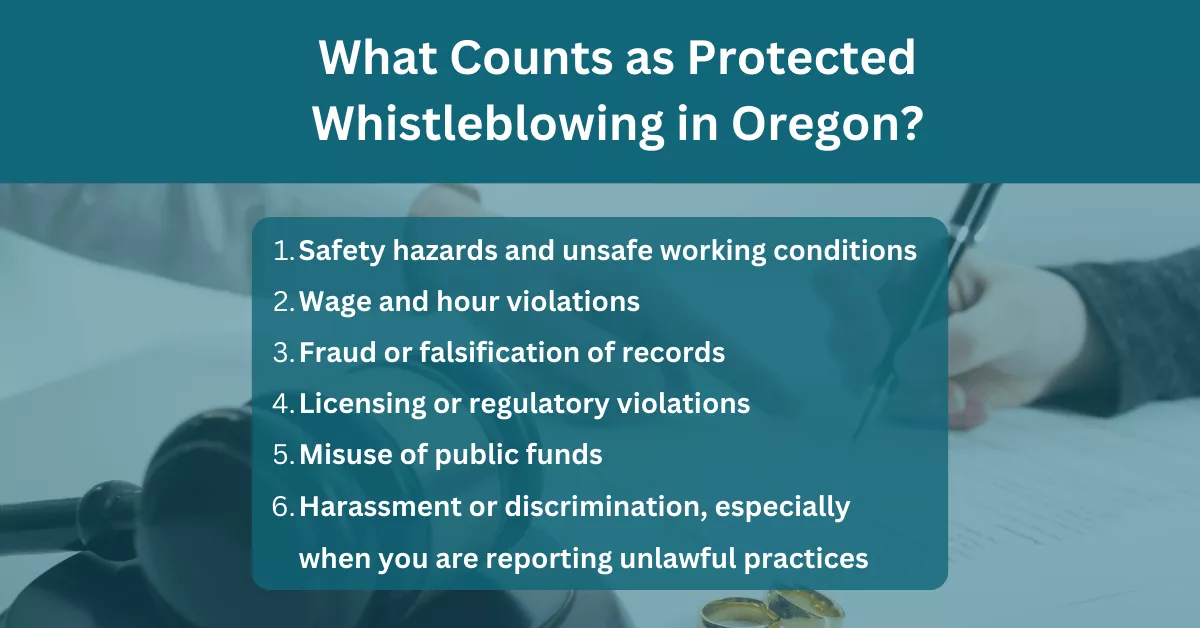 What counts as protected whistleblowing in Oregon
Oregon whistleblower protections are often associated with ORS 659A.199 and related administrative rules. Oregon’s administrative rule explains that ORS 659A.199 prohibits employers from retaliating against an employee for a good faith report of information the employee believes is evidence of a violation of state or federal law, rule, or regulation, and the report can be made to anyone.
This can cover reports about many issues, such as:
- Safety hazards and unsafe working conditions
- Wage and hour violations
- Fraud or falsification of records
- Licensing or regulatory violations
- Misuse of public funds
- Harassment or discrimination, especially when you are reporting unlawful practices
Protections are strongest when your report is specific, documented, and made in good faith.
When you actually need a whistleblower lawyer
Not every workplace complaint requires an attorney. But certain situations make legal help much more valuable.
Consider talking to a whistleblower lawyer early if any of the following are true:
- Your report involves potential legal exposure for the company
Fraud, public funding, healthcare billing, safety violations, or systemic wage theft often trigger aggressive employer responses. - You are a supervisor, manager, or compliance-facing employee
These roles can make the company treat your report as a bigger threat, and employers sometimes attempt to reframe you as the problem. - You already see signs of retaliation
Sudden discipline, schedule changes, isolation, demotion, or a rushed performance plan right after you raised concerns. - You are being asked to sign something
Severance agreements, nondisparagement clauses, nondisclosure provisions, or “resignation” paperwork can affect your rights. - You need to report to a government agency
Certain claims have fast deadlines, and the first report can shape the entire case.
What a whistleblower lawyer does before you report
The best whistleblower representation often happens before any formal report is made. This is where a lawyer can help you avoid common traps and build a stronger case if retaliation occurs.
1. Clarifies whether your report is protected activity
A whistleblower lawyer helps identify what law or regulation is implicated and whether your report fits within protected activity. That matters because retaliation claims often turn on whether the report was protected and whether the employer knew about it.
2. Builds a reporting strategy that preserves your credibility
This does not mean “go nuclear.” It means reporting in a way that is clear, professional, and documented.
A lawyer may help you decide:
- Whether to report internally first or go directly to an agency
- Whether to report to HR, a supervisor, compliance, or a hotline
- How to describe the problem without speculation
- How to avoid emotional language that can be used against you later
Oregon’s whistleblowing rule emphasizes good faith reporting, so clarity and professionalism help protect you.
3. Helps you preserve evidence legally
Evidence wins retaliation cases. A whistleblower lawyer will often advise you to preserve and organize:
- Emails and written complaints
- Text messages and chat logs
- Policies, training materials, and relevant procedures
- Pay records or safety documentation if applicable
- Names of witnesses and what they observed
This should be done carefully. Do not copy trade secrets or private client data. If you are unsure what you can keep, ask a lawyer first.
4. Anticipates the company’s likely defenses
Employers often respond to whistleblowing by claiming:
- Performance issues existed before the report
- You violated a policy
- The report was not made in good faith
- The decision-maker did not know about the report
- The action was part of a restructuring or budget cut
A lawyer will help you build a timeline that makes these defenses harder to sell.
What a whistleblower lawyer does after retaliation starts
If your employer punishes you after you report illegal activity, the case shifts from prevention to protection.
1. Creates a retaliation timeline and evidence file
BOLI’s whistleblowing guidance makes clear that employees can have civil rights protections if they experience retaliation due to protected whistleblowing activity, including filing with BOLI or suing in circuit court.
A lawyer will help you document:
- The date and content of the report
- The employer’s response
- The first adverse action
- Escalation patterns, such as write-ups, shift changes, or isolation
- Any comparator evidence showing different treatment of other employees
2. Handles communications so you do not get cornered
After a report, employers may request meetings, interviews, or written statements. Sometimes they press for a resignation.
A whistleblower lawyer can:
- Draft responses
- Help you request written explanations
- Prepare you for HR interviews
- Prevent unintentional admissions
- Ensure your complaint is on record
3. Evaluates agency options and deadlines
Depending on the facts, you may have multiple avenues:
- BOLI for whistleblowing and retaliation claims
- OSHA for safety-related retaliation, using OSHA’s whistleblower complaint process
- Other federal programs OSHA administers, each with its own deadline
OSHA’s whistleblower resource notes that filing deadlines vary by statute, and some are very short. That is why early legal advice matters.
4. Prepares for litigation if the case is headed to court
A whistleblower lawyer builds the case like litigation from day one:
- Identifying legal claims
- Preserving witness testimony
- Drafting demand letters when appropriate
- Calculating damages
- Evaluating settlement versus filing suit
 What damages can a whistleblower case include
Damages depend on the claim type and where it is filed, but common categories include:
- Back pay for lost wages
- Front pay if reinstatement is not realistic
- Lost benefits
- Emotional distress damages, depending on the claim
- Attorney fees where authorized
In OSHA-related retaliation matters, remedies can include reinstatement and back pay, depending on the statute and enforcement route.
A lawyer will also consider whether your case involves multiple overlapping issues, such as discrimination, harassment, wage violations, or unsafe working conditions.
How to protect yourself if you are about to report misconduct
If you are considering reporting illegal activity, these steps often make a real difference.
- Write down what happened and when
Focus on facts: dates, locations, who was involved, what was said or done. - Gather supporting documents you can lawfully access
Emails, policies, schedules, pay records, safety instructions. - Report in writing when possible
Written reports create timestamps and reduce later disputes about what was said. - Avoid overstatements
Stick to what you observed and what you reasonably believe. - Do not sign anything under pressure
Especially resignations, “last chance” agreements, or severance releases. - Talk to a whistleblower lawyer early
A short strategy conversation can prevent common mistakes.
Conclusion
If you are reporting illegal activity at work, a whistleblower lawyer can do far more than file paperwork. The right attorney helps you plan a protected report, preserve evidence, anticipate retaliation, and take action quickly if your employer punishes you for speaking up. Oregon’s whistleblowing framework protects good faith reports, and BOLI explains that a report does not have to be substantiated for protections to apply.
FAQs
Do I need proof before I report?
Not always. Whistleblower protection often turns on good faith and reasonableness. BOLI notes that a report does not have to be substantiated as long as the employee had a good faith belief when reporting.
Is internal reporting protected in Oregon?
Oregon’s whistleblowing rule explains that ORS 659A.199 covers good faith reports of suspected legal violations made to anyone, which can include internal reports.
What counts as retaliation?
Retaliation can include firing, demotion, reduced hours, schedule changes, hostile treatment, and other adverse actions tied to your report.
What if my report is about safety?
OSHA administers whistleblower protections for safety-related complaints and provides an online complaint form. Filing deadlines vary by statute and some can be short.
Can I sue, or do I have to go through an agency?
It depends on the claim. BOLI explains employees may have options including filing a complaint with BOLI or suing in circuit court for protected whistleblowing retaliation. A lawyer can help choose the best path.
How Meyer Employment Law Can Help
Meyer Employment Law is a Portland based firm focused on representing Oregon employees in workplace disputes, including retaliation and whistleblower-related matters. When workers report illegal activity, safety concerns, fraud, wage violations, or other misconduct, the risk of backlash can be real.
Our attorneys help Oregon employees understand their rights, document what happened, and respond strategically if an employer threatens, disciplines, or terminates them after a report.
If you would like to learn more about the firm and the employee-focused approach we take, you can visit Meyer Employment Law. If you want to learn more about the attorneys and the firm’s mission, you can read about our team on the About page. If you are considering whether you need a whistleblower lawyer or you are already facing retaliation after reporting illegal activity, you can reach out through our Contact page to request a confidential consultation.