When you’ve been harassed at work and decide to seek legal help, choosing the right lawyer is critical. Many attorneys handle employment cases, but not all practice exclusively for employees. Some firms represent both employers and employees in different matters, and while this may seem innocuous, it raises significant conflict‑of‑interest concerns. Choosing a law firm that represents employees only ensures your lawyer’s loyalties are clear and undivided, giving you the best chance to hold your employer accountable.
In this article, we explain how conflicts of interest arise in harassment cases, outline ethical rules that govern attorney conduct, and highlight the benefits of hiring an employee‑side firm like Meyer Employment Law.
Read More:
Oregon Employment Discrimination Law
5 Reasons to Hire an Oregon Employment Lawyer
How to Prove Workplace Discrimination in an Oregon Court of Law
How to Report Workplace Discrimination in Oregon

The Problem with “Both Sides” Representation
Some law firms handle employment law matters for both employers and employees. One day, they might defend a company against a discrimination complaint. On another, they might represent an employee suing a different company for harassment. While these firms advertise broad expertise, they walk a fine ethical line.
Conflicts of interest under Oregon law
The Oregon Rules of Professional Conduct (ORPC) govern attorney ethics. Rule 1.7 addresses conflicts of interest and prohibits a lawyer from representing a client if the representation is directly adverse to another client or if there is a significant risk that the representation will be materially limited by the lawyer’s responsibilities to another client. The rule provides two key scenarios:
- Directly adverse conflicts: Occur when a lawyer pursues a claim against another client. For example, a firm cannot represent an employee suing a company if that company is also a current client in another matter. The Oregon State Bar Bulletin explains that directly adverse conflicts are forbidden unless all clients give written, informed consent. In litigation, consent is rarely appropriate, because the attorney must vigorously advocate against their own client.
- Material limitation conflicts: Arise when a lawyer’s representation may be limited by obligations to another client. For example, a firm that regularly defends employers might hesitate to push aggressive discovery or pursue high damages when suing a different employer, fearing it could alienate future business. Such divided loyalties violate ethical rules because the lawyer’s ability to advocate is compromised.
Rule 1.7 does allow representation in limited circumstances if each affected client gives informed consent in writing and the lawyer reasonably believes they can provide competent and diligent representation to each client. However, the Oregon State Bar warns that even with consent, representing opposing parties in litigation is generally prohibited. The risk of divided loyalty is simply too great.
Practical risks for harassment victims
When a firm represents employers, its attorneys build relationships with HR departments, in‑house counsel and insurance carriers. These relationships can subtly influence how aggressively a firm pursues claims on behalf of employees. Consider these scenarios:
- Discovery requests: A firm might avoid demanding emails or personnel files that could embarrass an employer they hope to represent in the future.
- Settlement strategy: To maintain goodwill with employers, a firm might recommend that an employee accept a lower settlement rather than risk harming its reputation with potential defense clients.
- Legal arguments: A firm might avoid creative or novel legal theories that could set precedent unfavorable to employers. For example, in co‑worker harassment cases, firms representing employers might emphasize narrow liability standards, while employee‑only firms are more likely to argue for broad employer responsibility under OAR 839‑005‑0030.
These subtle biases can make a big difference in the outcome of your case. When your lawyer also defends employers, you may wonder whose interests they are truly prioritizing.
Ethical Rules Safeguard Client Loyalty
The legal profession takes conflicts of interest seriously. ORPC Rule 1.7 states that a lawyer must not represent a client if representation involves a current conflict of interest unless two conditions are met: the lawyer reasonably believes they can provide competent and diligent representation, and each affected client gives informed consent, confirmed in writing. Even then, the rule prohibits representation when the conflict involves asserting a claim against another client in the same proceeding.
The Oregon State Bar Bulletin warns that directly adverse conflicts occur when a lawyer is asked to pursue claims against another client. In such cases, representation is forbidden unless both clients give informed consent. Even then, the article notes that representing both sides in litigation is generally unethical.
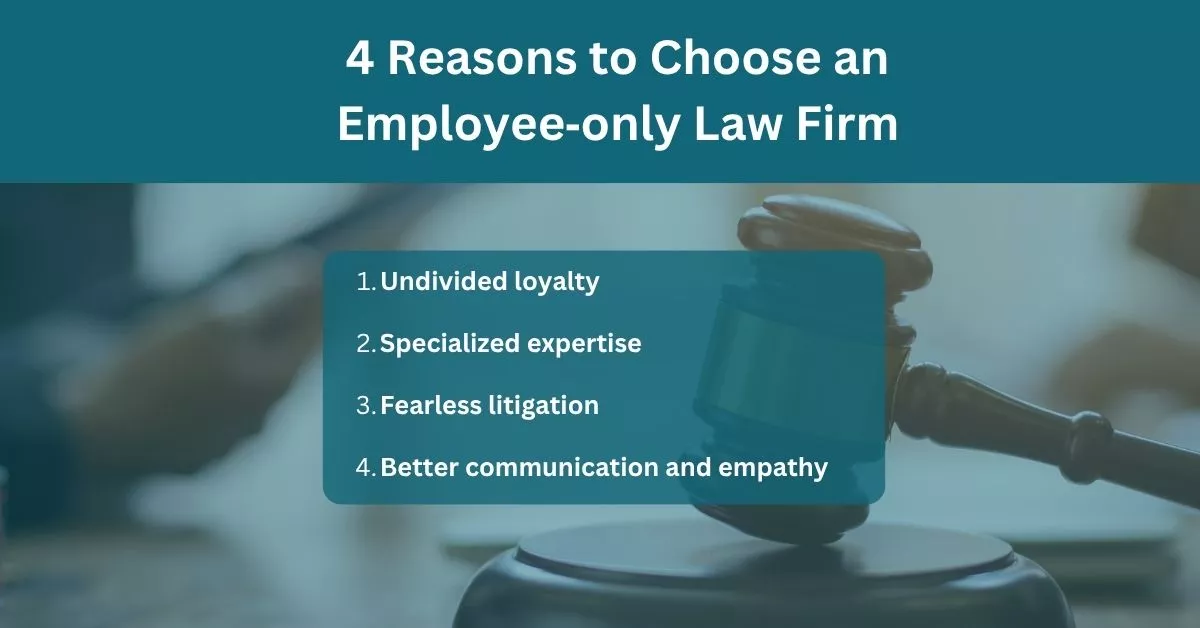
4 Reasons to Choose an Employee‑only Law Firm
Undivided loyalty
When you hire a firm that represents only employees, you eliminate the risk of your lawyer having obligations to your employer or other employers. Your attorney’s duty is solely to you. They can pursue every legal avenue and demand full compensation without worrying about harming relationships with defense clients. This undivided loyalty fosters trust and ensures your case receives zealous advocacy.
Specialized expertise
Employee‑only firms focus exclusively on workers’ rights. They stay up to date on the latest developments in discrimination law, wage and hour regulations, family leave statutes and retaliation protections.
For example, a firm like Meyer Employment Law closely follows changes in the Oregon Workplace Fairness Act, BOLI’s administrative rules and case law such as Garcez v. Freightliner (which sets standards for employer liability when co‑workers harass each other). This deep knowledge translates into stronger legal strategies.
Fearless litigation
Because employee‑side firms do not rely on employers for income, they are willing to take cases to trial and challenge powerful companies. They won’t shy away from asking tough questions in depositions, filing motions to compel evidence or seeking significant damages. Their reputation is built on holding employers accountable, not maintaining corporate relationships.
Better communication and empathy
Clients often feel more comfortable sharing personal details and sensitive information when they know their attorney does not represent employers. Employee‑only firms are attuned to the emotional toll harassment and discrimination can take. They provide supportive, compassionate counsel while aggressively pursuing justice.
Red Flags When Hiring an Employment Lawyer
When researching attorneys for a harassment case, watch out for these warning signs:
- Mixed practice: Does the firm list both employer defense and employee representation on its website? If so, ask how they avoid conflicts and whether they have ever represented your employer.
- Insurance industry ties: Some employment lawyers work closely with insurance companies that cover employers. Ask whether the firm also handles insurance defense cases.
- Reluctance to litigate: If the lawyer seems hesitant to file a lawsuit or pushes for quick settlement without exploring all options, they may be prioritizing their relationships with defense counsel.
If you spot these issues, consider consulting an employee‑only firm.
Conclusion
When facing workplace harassment, conflict‑free representation can make the difference between a fair outcome and a compromised one. Firms that represent both employers and employees may struggle with divided loyalties, whereas employee‑only firms owe their allegiance solely to you.
By understanding Oregon’s rules on conflicts of interest and the practical risks of mixed practice, you can choose a lawyer who will pursue your case with unwavering dedication. Meyer Employment Law’s exclusive focus on employee rights means you have an advocate who understands the complexities of harassment law and is committed to your success.
FAQs
Is it unethical for a firm to represent both employees and employers? Not necessarily. ORPC Rule 1.7 allows a lawyer to represent clients with conflicts if they reasonably believe they can provide competent representation and each client gives informed consent. However, the Oregon State Bar warns that representing opposing parties in litigation is generally prohibited. Even when technically permissible, many clients prefer lawyers without divided loyalties.
What questions should I ask when interviewing an employment lawyer? Ask whether the firm represents employers, whether they have sued your employer before, how they handle conflicts of interest and whether they will personally handle your case. Also inquire about their experience with similar claims and their willingness to go to trial.
Can I change lawyers if I discover a conflict later? Yes. You have the right to change attorneys if you believe a conflict of interest exists. You should consult new counsel promptly so your case isn’t delayed.
Will a conflict of interest affect my settlement? Possibly. If a lawyer has a relationship with an employer or insurer, they may be more inclined to settle quickly. Hiring an employee‑only firm helps ensure settlement decisions are based solely on your best interests.
How Meyer Employment Law can help
At Meyer Employment Law , we represent Oregon workers only, never employers. Our firm’s mission is to fight for employees who have been harassed, discriminated against or retaliated against at work. Here’s what sets us apart:
- Exclusive focus on employee rights: We do not defend employers, so our loyalty to our clients is never compromised.
- Deep knowledge of employment law: From harassment and discrimination cases to wage claims and leave laws, we understand the statutes, regulations and case law that protect Oregon workers.
- Aggressive advocacy: We aren’t afraid to take cases to trial or demand significant damages. We view litigation as a tool to hold employers accountable and deter future misconduct.
- Compassionate guidance: We know that confronting your employer can be intimidating. Our attorneys and staff provide supportive, clear communication throughout your case.
Contact us to schedule a confidential consultation. Let us help you navigate your harassment claim with confidence, knowing that your lawyer is 100 % on your side.