Expecting a child is an exciting and often stressful time. Along with preparing for a new family member, many expecting parents worry about whether they will be able to take time off work – and whether their job will be there when they return. Oregon and federal law provide strong protections for pregnant workers and new parents.Employers generally cannot deny maternity leave when you qualify for it, and they may not retaliate against you for taking leave.
This article explains the different types of leave available in Oregon, including the Oregon Family Leave Act (OFLA), Paid Leave Oregon, pregnancy accommodations, and the federal Family and Medical Leave Act (FMLA). We’ll review who is eligible, how much leave is available, and what steps to take if your employer denies or interferes with your leave.
Read More:
Oregon Employment Discrimination Law
Unlawful Termination Due to Maternity Leave in Oregon
Do I Need an Oregon Pregnancy Discrimination Attorney?
5 Types of Discrimination in the Workplace

Overview of Maternity Leave Laws in Oregon
Oregon’s leave laws work together to protect employees during pregnancy, childbirth and the early months of a child’s life. The main sources of protection are:
- Oregon Family Leave Act (OFLA):Provides unpaid, job‑protected leave to employees of covered employers.
- Paid Leave Oregon:A state program that provides paid benefits and job protection during family or medical leave.
- Pregnancy accommodations law:Requires reasonable accommodations and prohibits discrimination against pregnant employees.
- Family and Medical Leave Act (FMLA):Federal law that provides unpaid, job‑protected leave for certain employees.
Depending on your employer’s size and your length of employment, you may qualify for more than one of these protections.
Oregon Family Leave Act (OFLA)
The Oregon Family Leave Actapplies to employers with 25 or more employees. To be eligible, an employee must have worked for their employer at least 180 calendar daysand for an average of 25 hours per weekduring the 180‑day period. Under OFLA, employees may take up to 12 weeks of leave per yearfor the following reasons:
- Parental leave: To care for and bond with a newborn, newly adopted child, or newly placed foster child.
- Serious health condition: To care for the employee’s own serious health condition or that of a family member.
- Pregnancy disability: Leave for pregnancy‑related conditions is treated separately (see below).
- Sick child leave: To care for a child with a non‑serious illness requiring home care.
- Military family leave: To address an active duty family member’s leave or deployment.
- Bereavement leave: Up to two weeks of leave after the death of a family member.
Additional leave for pregnancy disability
OFLA provides an additional 12 weeks of pregnancy disability leavebeyond the standard 12 weeks. This means a pregnant employee may be entitled to up to 24 weeks of leavein a year, giving 12 weeks for pregnancy‑related conditions, and 12 weeks of parental leave. Pregnancy disability leave can be used before or after childbirth if a healthcare provider determines you are unable to perform your job due to pregnancy or childbirth.
Job protection and benefits
Employers must restore employees returning from OFLA leave to their former job or an equivalent positionwith the same benefits and pay. They must also continue health insurance and other benefits during leave. Discrimination or retaliation for requesting or taking OFLA leave is prohibited. If your employer denies leave, cuts your hours, or demotes you because you requested OFLA leave, they are likely violating the law.
Paid Leave Oregon
Paid Leave Oregonis a state insurance program that went into effect in 2023. It provides up to 12 weeks of paid family, medical, or safe leave, with an additional two weeks (14 days total)for pregnancy‑related health conditions. Paid leave benefits are funded by employer and employee contributions and are administered by the Oregon Employment Department.
Who is eligible?
To receive paid leave benefits, employees must have earned at least $1,000 in the base yearand must experience a qualifying event (such as childbirth, bonding with a new child, or recovering from a serious health condition). Importantly, employers must provide job protectionfor employees taking paid leave if the employee has worked for the employer for at least 90 consecutive days. If you qualify, Paid Leave Oregon pays a percentage of your wages while you are on leave and your job is protected upon return.
Interaction with OFLA and FMLA
Paid leave can run concurrently with OFLA and FMLA leave. For example, if you take 12 weeks of Paid Leave Oregon for childbirth, that time may also count against your OFLA leave entitlement. However, because OFLA allows additional time for pregnancy disability, you may still have unpaid OFLA leave available after your paid benefits end. It’s important to speak with your employer and an attorney to coordinate leave under multiple programs.
Pregnancy Accommodations: Rights During Pregnancy
Oregon law makes it illegal to discriminate because of pregnancy, childbirth, or related conditions. Employers with six or more employees must offer reasonable accommodationsto employees who are pregnant or experiencing pregnancy‑related conditions. Reasonable accommodations can include modifications such as:
- More frequent or longer breaks,
- Seating or assistance with heavy lifting,
- A modified work schedule,
- Transfer to a less strenuous position,
- Job restructuring or light duty,
- And up to 12 weeks of unpaid leave.
Employers cannot require pregnant employees to take leave if a reasonable accommodation would allow them to continue working. They also cannot fire, demote or retaliateagainst someone for requesting accommodations or for taking protected leave. Employers must post a notice of employees’ rights under the law and provide written notice to new and existing employees at the time of hire and annually.
Family and Medical Leave Act (FMLA)
The Family and Medical Leave Actis a federal law that requires covered employers (those with 50 or more employees) to provide up to 12 workweeks of unpaid, job‑protected leavein a 12‑month period for certain family and medical reasons. Eligible employees must have worked for the employer for at least 12 months and for at least 1,250 hours in the past year. FMLA leave may be taken for:
- Birth of a child and bonding with a newborn.
- Placement of a child for adoption or foster care.
- Serious health condition of the employee or a spouse, child or parent.
During FMLA leave, employers must continue the employee’s group health insurance on the same terms as if the employee were working. Upon return, the employee must be restored to the same or an equivalent position.
Can Your Employer Deny Maternity Leave?
Denial of OFLA or FMLA leave
Employers cannot deny OFLA or FMLA leave if you are eligible and provide proper notice. Under OFLA, employees generally must give at least 30 days’ noticefor foreseeable leave (like childbirth) or as much notice as practicable for unexpected situations. Employers can require verification, such as a doctor’s certification for a serious health condition, but they cannot demand more information than allowed by law.
If your employer denies leave without a valid reason, cuts your hours, or threatens your job, they are likely violating OFLA, FMLA, or both. You should document all communications and contact BOLI or an attorney immediately.
Denial of pregnancy accommodation
It is unlawful for employers to refuse reasonable accommodations for pregnant employees. If you request a change such as a light‑duty assignment or more frequent breaks, your employer must engage in a dialogue to find an accommodation. The only exception is if the accommodation would cause an undue hardship for the employer. In practice, most accommodations are low cost and easy to implement.
If your employer refuses to accommodate you, disciplines you for requesting accommodations, or suggests you resign, you may have a discrimination claim. Document the refusal and contact a discrimination lawyer.
Denial of Paid Leave Oregon benefits
Paid Leave Oregon benefits are administered by the state, not your employer. However, your employer plays a role in approving your leave dates and protecting your job. They cannot discourage or prevent you from applying for paid leave or retaliate against you for doing so. If your employer refuses to approve your leave or threatens your job, speak with the Oregon Employment Department or an attorney from Meyer Employment Law.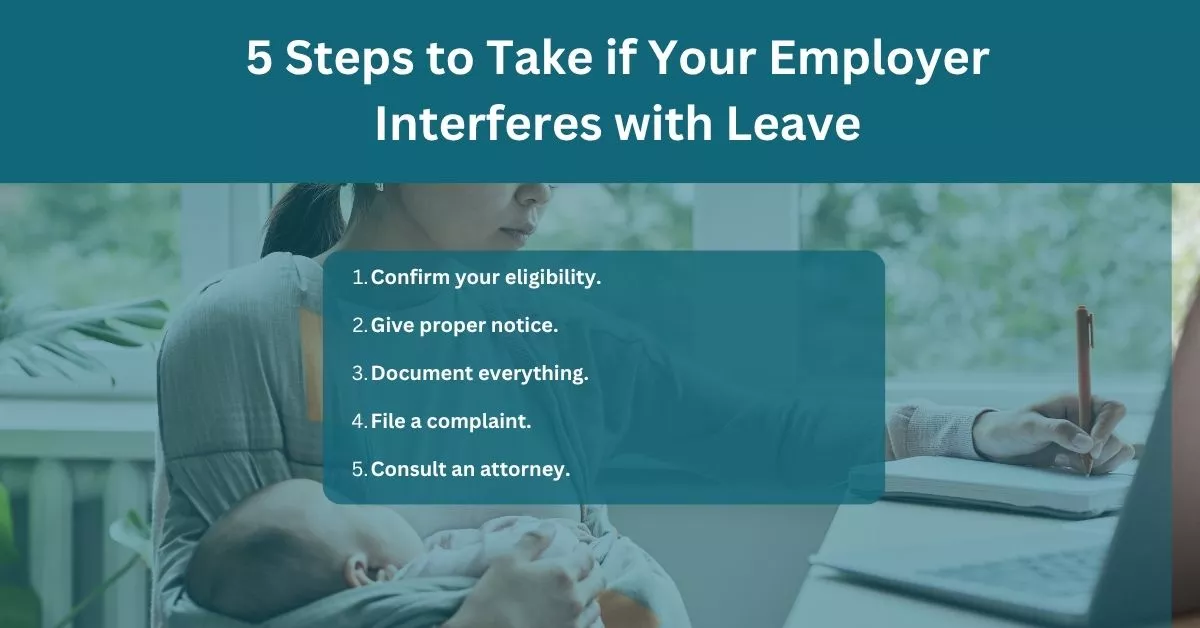
5 Steps to Take if Your Employer Interferes with Leave
- Confirm your eligibility.Review your length of service, hours worked and employer size to determine if you qualify under OFLA, Paid Leave Oregon or FMLA. If you’re unsure, contact BOLI or an attorney.
- Give proper notice.Submit your leave request in writing, stating the expected start and end dates and the reason for leave. Keep copies of all correspondence.
- Document everything.Keep notes of conversations with your employer, including any statements denying or discouraging leave. Save emails, letters and policies. If your employer denies leave, ask for the reason in writing.
- File a complaint.If your employer unlawfully denies leave or retaliates against you, you can file a complaint with BOLIor the U.S. Department of Labor. BOLI enforces state leave laws and can investigate your claim. The Department of Labor enforces FMLA.
- Consult an attorney.An attorney from Meyer Employment Lawcan help you understand your rights, respond to employer demands, and file legal claims if necessary. Because leave laws are complex, professional advice is invaluable.
Conclusion
Navigating pregnancy and family leave can be stressful, but Oregon law offers robust protection for expecting parents and new families. With overlapping rights under OFLA, Paid Leave Oregon, pregnancy accommodation laws and the federal FMLA, most employees can secure the time they need to welcome a child or recover from childbirth. Employers that deny leave, fail to accommodate pregnancy‑related conditions or retaliate against employees violate the law and can be held accountable. Document your requests, understand your eligibility and seek legal advice if your rights are not respected. With the right information and attorney support from Meyer Employment Law, you can take the leave you deserve and protect your job and health.
FAQs
How much maternity leave am I entitled to under OFLA?
Eligible employees can take up to 12 weeksof parental leave plus 12 weeks of pregnancy disability leave. This means up to 24 weeksin a year for pregnancy and childbirth.
Do I get paid during OFLA leave?
No. OFLA leave is generally unpaid, but you may use your accrued vacation, sick leave or other paid time off. You may also be eligible for Paid Leave Oregon, which provides wage replacement for up to 12 or 14 weeks.
What if my employer has fewer than 25 employees?
OFLA does not apply to employers with fewer than 25 employees. However, Paid Leave Oregon applies to most employers, regardless of size, and offers job protection after 90 days. Federal FMLA applies only to employers with 50 or more employees.
Can my employer make me take time off if I’m pregnant?
Generally, no. Employers cannot force pregnant employees to take leave if a reasonable accommodation would allow them to continue working.
Does Oregon’s pregnancy accommodation law require my employer to provide light duty?
Yes. If light duty or job restructuring is a reasonable accommodation that does not create an undue hardship, the employer must provide it.
How Meyer Employment Law can help
If your employer is denying you maternity leave, failing to accommodate your pregnancy, or retaliating against you for requesting leave, Meyer Employment Lawcan help. Our attorneys focus exclusively on representing employees and have deep experience navigating Oregon and federal leave laws. We can:
- Evaluate your eligibility under OFLA, Paid Leave Oregon, pregnancy accommodation laws and FMLA.
- Help you request leave or accommodations and ensure your notice meets legal requirements.
- Contact your employer to enforce your rights and demand compliance.
- File complaints with BOLI or federal agencies if your employer violates the law.
- Pursue litigation to recover lost wages, reinstatement, emotional distress damages and attorney fees.
Contact usto schedule a confidential consultation. We can help ensure you receive the leave you’re entitled to and protect you from discrimination or retaliation.