No employee should have to choose between earning a paycheck and protecting their safety. If your employer asks you to perform work that creates an imminent risk of serious injury or death, Oregon and federal laws may give you the right to refuse the work without facing unlawful retaliation. However, those protections apply only under certain circumstances, and understanding your rights before taking action is important.
Unsafe work environments can take many forms, including dangerous equipment, missing safety protections, chemical exposure, electrical hazards, unsafe construction sites, or other working conditions that place employees at unnecessary risk. If your employer ignores serious safety concerns or disciplines you for reporting hazardous conditions, you may have legal protections under Oregon employment laws in addition to any rights provided by Oregon OSHA or federal OSHA.
Meyer Employment Law represents employees only throughout Oregon. Our attorneys help workers understand whether they have the legal right to refuse dangerous work, determine whether an employer’s actions may violate workplace safety or retaliation laws, and evaluate the legal options available after reporting unsafe working conditions.
Continue reading to learn when Oregon law allows employees to refuse dangerous work, the steps you should take to protect your rights, and what legal remedies may be available if your employer retaliates against you for putting safety first.
Read More:
- Oregon Independent Contractor Laws: What Workers and Businesses Must Know
- Navigating Hostile Work Environments
- Oregon Labor & Employment Laws: What You Need to Know
What Qualifies as an Unsafe Work Environment?
Not every unpleasant or uncomfortable workplace is considered legally unsafe. However, employers have a legal duty to provide employees with a workplace that is free from recognized hazards that could cause serious injury or death. If your employer knowingly allows dangerous conditions to exist or fails to correct significant safety hazards, you may have the right to report the issue, refuse certain dangerous work under specific circumstances, or pursue legal remedies if retaliation occurs.
Examples of unsafe work environments may include:
Missing Fall Protection
Employees working on roofs, scaffolding, ladders, elevated platforms, or other high surfaces should be provided with appropriate fall protection when required by safety regulations. Missing guardrails, harnesses, or other fall protection equipment can create a serious risk of injury or death.
Dangerous Machinery
Employers should properly maintain equipment and provide necessary machine guards and safety devices. Operating defective machinery or equipment with missing safety guards can place workers at significant risk of severe injury.
Chemical Exposure
Employees working around hazardous chemicals should receive appropriate training, protective equipment, and information about potential health risks. Exposure to toxic substances without proper safeguards may violate workplace safety requirements.
Electrical Hazards
Exposed wiring, damaged electrical equipment, overloaded circuits, and improper lockout or tagout procedures can create serious electrical hazards. Employers should correct these conditions before requiring employees to perform work.
Lack of Personal Protective Equipment (PPE)
Depending on the work being performed, employers may be required to provide appropriate personal protective equipment such as hard hats, safety glasses, gloves, respirators, hearing protection, or protective clothing. Requiring employees to perform hazardous work without necessary PPE may create an unsafe work environment.
Threats of Workplace Violence
Unsafe working conditions are not always physical hazards. Threats of violence, inadequate security measures, or an employer’s failure to address known workplace violence concerns may place employees at unnecessary risk.
Extreme Heat or Other Dangerous Environmental Conditions
Employees working in excessive heat, extreme cold, confined spaces, or other hazardous environmental conditions may face increased risks of serious illness or injury if employers fail to implement appropriate safety measures.
Fire and Emergency Hazards
Blocked exits, missing fire extinguishers, disabled fire alarms, improper storage of flammable materials, or failure to maintain emergency evacuation procedures can create dangerous working conditions that place employees and others at risk.
Not every safety concern gives an employee the immediate right to refuse work. However, if dangerous conditions create an imminent risk of serious injury or death, Oregon and federal laws may provide important legal protections. Understanding when those protections apply begins with knowing your workplace rights.
Your Right to a Safe Workplace
Under the Oregon Safe Employment Act (ORS 654.062) and Oregon OSHA regulations, employers must provide workplaces free from recognized hazards that can cause death or serious physical harm.
The Oregon Occupational Safety and Health Administration enforces these standards and investigates complaints. Additionally, the federal Occupational Safety and Health Act (OSH Act) requires employers nationwide to furnish a workplace free from serious hazards (29 U.S.C. § 654).
Employees have the right to:
- Receive training and information about workplace hazards.
- Request OSHA inspections if they believe the workplace is unsafe.
- Access medical and exposure records.
- Report injuries and unsafe conditions without fear of retaliation.
- Refuse to perform work that would expose them to imminent danger under certain conditions.

When Can You Refuse Dangerous Work?
Both Oregon and federal law recognise that workers should not be forced to choose between their safety and their job. However, the right to refuse dangerous work is not unlimited; workers must follow specific steps and criteria.
According to Oregon OSHA’s fact sheet on Workers’ Right to Refuse Dangerous Work, employees can refuse hazardous assignments when all of the following are true:
- The employee asked the employer to correct the hazard, and the employer failed or refused to do so.
- The employee genuinely believes that performing the task would pose a risk of death or serious injury. The belief must be in good faith.
- A reasonable person would agree that the hazard is so serious that it creates an imminent danger.
- There is not enough time to eliminate the hazard through regular enforcement channels, such as filing a complaint with OSHA or BOLI.
The federal OSHA guidance echoes similar requirements: workers must first ask the employer to fix the hazard, refuse in good faith, and remain at work until ordered to leave if the employer does not address the danger. If all conditions are met, the refusal is protected.
Examples of Dangerous Work Refusals
- A construction worker notices that scaffolding lacks guardrails and the supervisor refuses to install them. The worker refuses to climb the scaffolding, believing it is a fall hazard. A reasonable person would agree that working on unguarded scaffolding is dangerous.
- A warehouse employee is told to clean a chemical spill without protective equipment. They ask the supervisor for proper gear, but the supervisor tells them to “just get it done.” The worker refuses due to the risk of chemical burns or inhalation.
- A truck driver is assigned to operate a vehicle with faulty brakes. After reporting the problem to management and being told to drive anyway, the driver refuses because the risk of collision is clear.
In each of these scenarios, the worker asked the employer to correct the hazard, believed in good faith that serious injury or death could occur, and there wasn’t time to seek an inspection.
Steps to Take if You Encounter Dangerous Work
If you find yourself in a hazardous situation, follow these steps to protect your safety and legal rights:
- Report the Hazard – Tell your supervisor about the dangerous condition and request that it be corrected. Document your conversation: note the date, time, who you spoke with, and what was said. If it is safe to do so, take photographs or videos of the hazardous condition before it is corrected. Visual evidence may help document the seriousness of the hazard if questions arise later. If you cannot safely take photographs, make detailed notes describing the condition and when you observed it.
- Refuse in Good Faith – If the hazard is not corrected, inform your supervisor that you cannot perform the task because you believe it poses a serious risk. Remain at the worksite until ordered to leave or the hazard is fixed. If possible, communicate your concerns in writing by email or text message so there is a record that you reported the hazard and explained why you believed the work presented an imminent danger. Remain professional and clearly explain the safety concern without refusing unrelated work assignments.
- Contact OSHA or Oregon OSHA – File a complaint with Oregon OSHA (for state‑regulated industries) or federal OSHA (for federal jurisdiction) as soon as possible. Provide details about the hazard and the employer’s response. OSHA will keep your identity confidential upon request. Keep copies of any complaints you submit, confirmation emails, case numbers, or correspondence with OSHA or Oregon OSHA. Maintaining organized records can help demonstrate that you reported the hazard and sought assistance through the appropriate channels.
- File a BOLI Complaint – Oregon’s Bureau of Labor and Industries (BOLI) handles retaliation complaints. The agency notes that it is illegal for employers to retaliate against employees for reporting unsafe conditions or exercising safety rights and that workers must file a complaint within one year of the discriminatory act. Retaliation could include firing, demotion, reduced hours, or harassment. If you believe your employer retaliated against you, begin keeping a written timeline of important events. Include the dates of safety complaints, conversations with supervisors, disciplinary actions, schedule changes, reductions in hours, or any other actions you believe were connected to your protected activity.
- Consult an Attorney – If you suffer retaliation or are injured because of unsafe working conditions, speak with an employment attorney as soon as possible. Preserve emails, text messages, incident reports, performance evaluations, photographs, and any written communications related to the hazard or your employer’s response. It is also helpful to identify coworkers or other witnesses who observed the unsafe conditions or participated in conversations about the hazard. An attorney can review the evidence, identify potential legal claims, explain your rights under Oregon law, and discuss the legal options available based on your circumstances.
Understanding Retaliation Protections
Oregon law safeguards employees who refuse dangerous work. The Oregon OSHA fact sheet explains that employer retaliation for refusing dangerous work or filing a complaint is illegal and that employees have one year to file a complaint with BOLI.
Federal law provides similar protection; OSHA instructs workers to contact the agency within 30 days of a retaliatory action to file a whistleblower complaint. Remedies may include reinstatement, back pay, and compensatory damages.
Documenting Retaliation
If your employer retaliates, keep a written record of events. Document changes in your job duties, hours, pay, or performance evaluations. Note any comments that suggest the employer’s actions are in response to your refusal or complaint. This evidence will support your claim when filing a retaliation complaint or lawsuit.
Workers’ Compensation and Unsafe Work Conditions
Workers who are injured due to unsafe conditions may be eligible for workers’ compensation benefits, including medical expenses, wage replacement, and permanent disability benefits. Oregon law prohibits employers from discriminating against or firing workers who file workers’ compensation claims. Employees who are fired or disciplined after an injury should seek legal advice about a workers’ compensation retaliation claim.
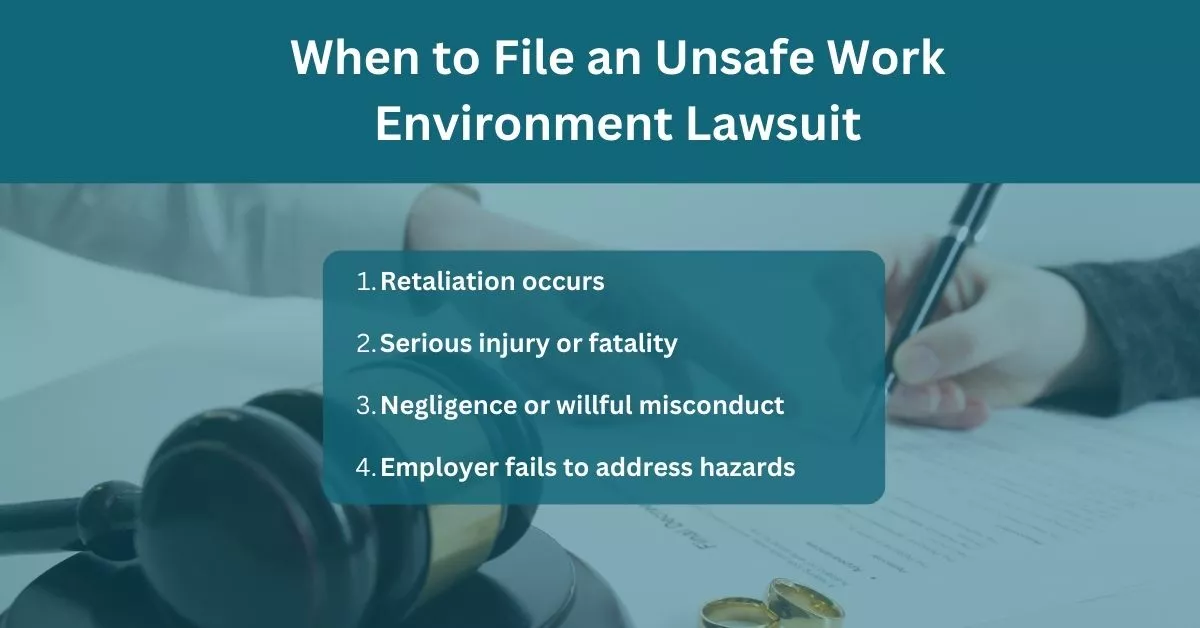
When to File an Unsafe Work Environment Lawsuit
In some situations, refusing dangerous work and filing safety complaints may not be enough to correct the issue or remedy the harm. Employees may consider litigation when:
- Retaliation occurs: The employer fires or demotes you for refusing dangerous work.
- Serious injury or fatality: You or a coworker is injured because of an uncorrected hazard.
- Negligence or willful misconduct: The employer knowingly violated safety standards or ignored repeated complaints.
- Employer fails to address hazards: Even after OSHA citations or BOLI complaints, the employer continues to ignore safety rules.
Depending on the circumstances, potential legal claims may include wrongful termination, negligence, intentional infliction of emotional distress, or actions under Oregon’s whistleblower and safety statutes. Consult an attorney experienced in workplace safety and employment law to discuss the appropriate course of action.
Practical Tips for Staying Safe
- Know Your Rights – Familiarize yourself with the safety policies in your employee handbook and the Oregon OSHA guidelines. Attend any safety training offered.
- Report Early – Don’t wait for a minor hazard to become a serious threat. Promptly report unsafe conditions.
- Don’t Sign Away Your Rights – Some employers require waivers or policies that discourage reporting hazards. These documents may not be enforceable and could violate the law.
- Support Coworkers – Encourage others to speak up when they notice unsafe practices. Collective action can prompt change more quickly.
- Keep Records – Maintain your own written log of hazards, complaints, and management responses. This can be essential evidence if a dispute arises.
Frequently Asked Questions About Unsafe Work Environments in Oregon
Can I refuse unsafe work in Oregon?
In some situations, yes. Oregon law may allow employees to refuse work that presents an imminent risk of serious injury or death if certain legal requirements are met. Generally, employees should first notify their employer about the hazard, request that it be corrected, and act in good faith. Whether your refusal is legally protected depends on the specific circumstances.
Can I be fired for reporting unsafe working conditions?
Oregon and federal laws generally prohibit employers from retaliating against employees who report unsafe working conditions, file workplace safety complaints, or exercise other protected workplace rights. Retaliation may include termination, demotion, reduced hours, disciplinary action, harassment, or other adverse employment actions. If your employer retaliates against you for raising legitimate safety concerns, you may have legal protections.
What if OSHA does not investigate my complaint?
OSHA may not investigate every complaint immediately, particularly if it determines the reported hazard does not require an on-site inspection. Even if OSHA does not open an investigation, you may still have legal rights under Oregon or federal employment laws. If you believe your employer retaliated against you or failed to correct dangerous conditions, speaking with an employment lawyer can help you understand your options.
Should I report the hazard in writing?
Whenever possible, yes. Reporting unsafe working conditions by email, text message, or another written method creates a record of your concerns and may help demonstrate that you notified your employer about the hazard. If you report the issue verbally, consider documenting the conversation afterward, including the date, time, and individuals involved.
Can I sue my employer for an unsafe work environment?
It depends on the circumstances. Some workplace safety issues are resolved through OSHA complaints or workers’ compensation claims, while others may involve wrongful termination, retaliation, whistleblower protections, or other employment law claims. An attorney can evaluate the facts of your situation and determine whether additional legal remedies may be available.
Can I collect workers’ compensation if I was injured?
If you were injured while performing your job, you may be eligible for workers’ compensation benefits under Oregon law. Workers’ compensation may provide medical benefits, wage replacement, and other benefits regardless of who caused the injury. In some situations, employees may also have separate legal claims if they experienced retaliation after reporting the injury or filing a workers’ compensation claim.
How long do I have to file a claim?
The deadline depends on the type of claim. OSHA complaints, BOLI retaliation complaints, workers’ compensation claims, and employment lawsuits each have different filing deadlines. Because important deadlines may apply, it is best to seek legal advice as soon as possible after an unsafe workplace incident or retaliatory action.
What evidence should I keep if I report unsafe working conditions?
Helpful evidence may include photographs or videos of the hazard when it is safe to obtain them, emails, text messages, incident reports, OSHA complaints, performance evaluations, disciplinary notices, witness information, and notes documenting conversations with supervisors or management. Keeping a written timeline of important events can also help preserve important details.
Conclusion
Unsafe working conditions endanger employees and expose employers to liability. Oregon and federal laws give workers the right to refuse work that could cause serious injury or death, as long as specific steps are followed.
If your employer fails to correct a hazard and retaliates when you raise concerns, you can file complaints with OSHA and BOLI. Document everything and seek legal counsel if necessary. Protecting your safety is not just your right, it’s the law.
Speak With an Oregon Wrongful Termination Attorney
If you believe you were wrongfully terminated, you do not have to determine on your own whether your employer violated the law. Meyer Employment Law represents employees only throughout Oregon and helps workers understand their rights after an unlawful termination, identify potential legal claims, and evaluate the options available under Oregon and federal employment laws.
During your confidential consultation, our attorneys will listen to your concerns, review the facts surrounding your termination, explain the employment laws that may apply, and answer your questions about the legal process. Whether your case involves retaliation, discrimination, protected leave, whistleblower protections, wage violations, or another employment law issue, we can help you understand your next steps.
Unsafe workplace cases often involve much more than a single safety violation. During a consultation, Meyer Employment Law carefully reviews the events leading up to the incident, the hazardous conditions involved, how management responded to employee concerns, and whether any employment laws may have been violated. Our attorneys examine available evidence, including emails, text messages, incident reports, personnel records, witness statements, and other documentation to evaluate the strength of a potential claim.
Many employees are surprised to learn that workplace safety complaints frequently overlap with other legal issues. An employee who reports dangerous working conditions may also experience retaliation, wrongful termination, discrimination, interference with protected leave, or other unlawful employment actions. Identifying every potential claim is an important part of protecting an employee’s legal rights because multiple claims may arise from the same workplace incident.
Meyer Employment Law represents employees throughout Oregon in workplace safety, retaliation, and other employment law matters. We help clients understand how Oregon and federal employment laws apply to their specific circumstances, explain the legal options available, and develop a strategy that reflects the facts of each case.
Because wrongful termination claims are often subject to important filing deadlines, it is important not to wait too long before seeking legal guidance. Early action can help preserve valuable evidence and protect your ability to pursue a claim.
Contact Meyer Employment Law today to schedule your confidential consultation with an experienced Oregon wrongful termination attorney.