Imagine applying for a job where your experience should be your greatest strength, but it becomes a silent barrier instead. Many skilled workers in Oregon over 40 find themselves overlooked for positions they’re qualified for, often replaced by younger, less experienced applicants.
Age discrimination in Oregon employment remains one of the least discussed yet most persistent workplace problems. It often hides behind coded language, vague rejections, or “cultural fit” excuses. But under both Oregon and federal law, denying someone an opportunity because of their age is illegal.
At Meyer Employment Law, we help job seekers identify signs of age bias, gather evidence, and hold employers accountable. This guide explains how age discrimination shows up in hiring, and what you can do if it happens to you.
Also read:
Oregon Employment Discrimination Law
How to Prove Workplace Discrimination in an Oregon Court of Law
5 Types of Discrimination in the Workplace

Understanding Age Discrimination in Oregon Employment
Both Oregon and federal law make it clear: age cannot be a factor in hiring decisions.
Under ORS 659A.030, it’s unlawful for employers to refuse to hire or to discriminate against someone because they are 40 or older. Federally, the Age Discrimination in Employment Act (ADEA)provides similar protection. These laws cover every stage of employment: from job listings and interviews to promotions and terminations.
Common examples of illegal practices include:
- Rejecting older applicants based solely on perceived “retirement risk.”
- Using terms like “recent graduate preferred” in job postings.
- Asking questions about age or retirement plans during interviews.
The law is clear: employers must evaluate candidates based on skills and experience, not age or assumptions about “fit.”
Signs of Age Discrimination in the Hiring Process
Age bias rarely appears as an outright statement — instead, it hides in patterns, language, and hiring outcomes. Understanding the signs can help you identify discrimination early.
Common Red Flags
- Coded language in job ads:“Digital native,” “energetic team,” or “tech-savvy young professionals.”
- Inappropriate interview questions:“When do you plan to retire?” or “How comfortable are you working with younger managers?”
- “Overqualified” feedback:Repeatedly used to reject experienced applicants.
- Exclusionary culture fit comments:Hiring decisions that prioritize youth over expertise.
Did You Know?
Nearly 3 in 5 workers over age 50say they’ve experienced or witnessed age discrimination during the hiring process, according to a national AARPstudy.
Source: AARP, “The Value of Experience” Study
Real-World Example
Consider a 58-year-old marketing professional who has managed multimillion-dollar campaigns. Despite her qualifications, she’s told she’s “not quite the right cultural fit” — while a 28-year-old with less experience gets the job. That’s the subtle reality of age discrimination in hiring today.
Recognizing these cues can empower you to document your experience and seek help before opportunities are lost.

The Legal Protections Against Age Discrimination in Oregon
Oregon law and federal law both prohibit discriminatory hiring practices:
- Oregon Law (ORS 659A.030):Forbids discrimination based on age, among other protected categories.
- Federal Law (ADEA):Protects workers aged 40+ from bias in hiring, pay, and promotion.
- BOLI (Oregon Bureau of Labor and Industries):Handles state-level discrimination complaints.
- EEOC (Equal Employment Opportunity Commission):Oversees federal claims.
Employers cannot:
- Advertise positions using age-coded language.
- Set upper age limits for applicants (except in rare, lawful circumstances).
- Refuse to hire based on assumptions about energy level or adaptability.
While the law is on your side, successfully proving discrimination often requires careful documentation and legal insight.
How to Prove Age Discrimination During Hiring
Proving age bias isn’t easy because employers rarely admit to it. However, with the right evidence, you can show that age was a deciding factor.
Key Types of Evidence
- Pattern evidence:The company consistently hires younger workers despite older applicants applying.
- Comparative evidence:A younger candidate with equal or lesser qualifications was chosen.
- Discriminatory language:Job postings or comments referring to youthfulness or “fresh energy.”
- Documentation:Emails, rejection letters, or notes from interviews showing potential bias.
The Importance of Timing
In Oregon, complaints must typically be filed within 300 daysof the discriminatory event through BOLIor the EEOC. Waiting too long can forfeit your right to pursue a claim.
A discrimination lawyer in Oregoncan help analyze your hiring experience, identify red flags, and collect supporting evidence before deadlines pass.
Gathering timely, credible documentation is the most effective way to prove age bias and protect your rights.
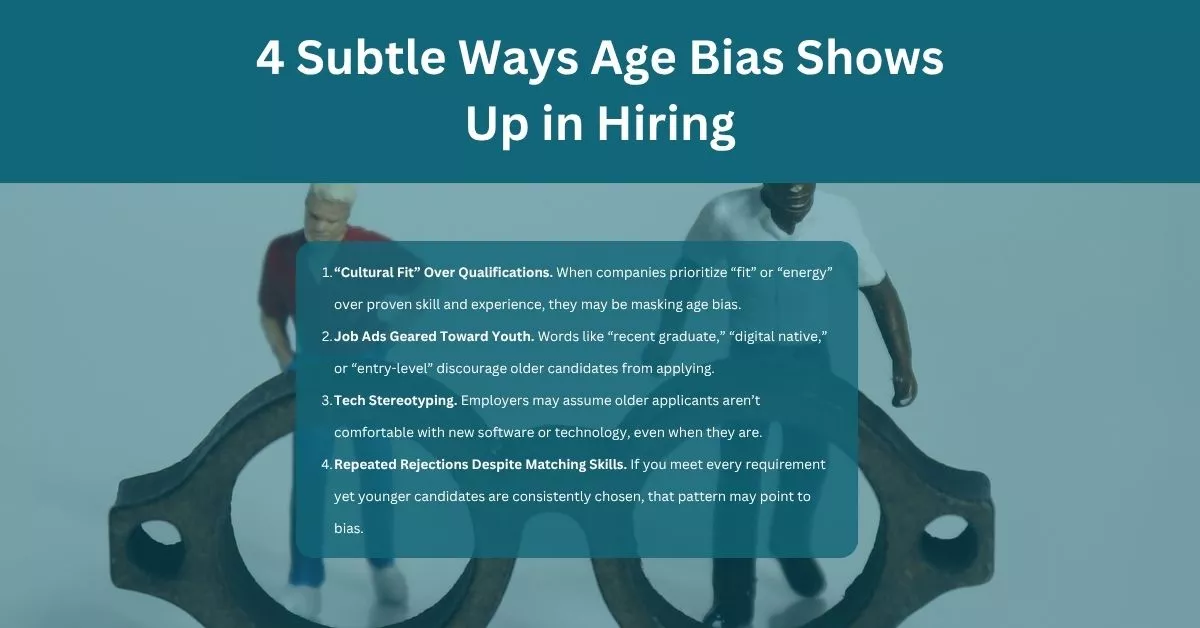
4 Subtle Ways Age Bias Shows Up in Hiring
Age discrimination doesn’t always announce itself, but it does leave clues. Here are three subtle ways bias can appear in the hiring process:
- “Cultural Fit” Over Qualifications
When companies prioritize “fit” or “energy” over proven skill and experience, they may be masking age bias. - Job Ads Geared Toward Youth
Words like “recent graduate,” “digital native,” or “entry-level” discourage older candidates from applying. - Tech Stereotyping
Employers may assume older applicants aren’t comfortable with new software or technology, even when they are. - Repeated Rejections Despite Matching Skills
If you meet every requirement yet younger candidates are consistently chosen, that pattern may point to bias.
If these red flags sound familiar, preserve your application records and consult an employment law lawyer in Oregon to review your situation.
What To Do If You Suspect Age Discrimination
If you believe you’ve been rejected because of your age, act quickly and methodically.
Steps to Take
- Document everything:Save job postings, emails, interview notes, and rejection letters.
- Track patterns:Keep a record if you notice multiple similar rejections.
- Consult a lawyer:A legal review helps determine whether your experience constitutes discrimination.
- File a complaint:You can file through BOLI or the EEOC, depending on your circumstances.
Employment discrimination laws are complex, and each case is different. An attorney can help you build your claim while protecting your privacy and career prospects.
Acting early can preserve your right to compensation and help prevent similar discrimination against others.
How Meyer Employment Law Can Help
Meyer Employment Lawrepresents Oregon workers who have experienced discrimination in hiring, promotion, or termination. Our team can:
- Review hiring records and application materials.
- Identify potential bias or unlawful screening practices.
- File claims with BOLI or EEOC.
- Negotiate settlements or litigate when necessary.
We focus exclusively on protecting employees and are committed to achieving fairness for older workers across Oregon.
With a skilled employment law lawyer on your side, you don’t have to face hiring discrimination alone.
Conclusion
Age discrimination in hiring is a hidden but pervasive issue that prevents skilled workers from contributing their experience and talent. Oregon law provides powerful protections — but enforcement depends on employees recognizing bias and taking action.
If you’ve faced repeated rejections or coded bias during the hiring process, it’s time to learn your rights.
Contact Meyer Employment Lawtoday for a confidential consultation. We’ll help you understand your options and fight for the fair treatment you deserve.
FAQs
Is it illegal for employers to ask my age when hiring?
Yes. Employers can verify your age only for legitimate reasons, such as licensing or legal compliance.
Can being told I’m “overqualified” count as discrimination?
It can, especially if used as an excuse to exclude older applicants.
What kind of proof helps in age discrimination cases?
Job postings, application records, rejection letters, and comparative hiring data are all valuable.
How long do I have to file a complaint?
Usually 300 days from the discriminatory act with BOLI or the EEOC.
Can I still work elsewhere while filing a claim?
Absolutely. Filing a claim doesn’t prevent you from continuing your job search or accepting another position.
About the Author
Meyer Employment Lawis a Portland-based firm dedicated to protecting Oregon employees from discrimination, harassment, and retaliation. Learn more about our team and practice areas at oregonworkplacelaw.com.