Executives are often the face of a business, and their departure can influence company culture, investor confidence, and future leadership. When a company asks you to sign a severance agreement, it’s important to remember that you have the right to negotiate.
Federal law does not require companies to pay severance wages. Rather, severance is typically offered as a goodwill gesture, to secure releases of claims, and to avoid litigation. Oregon law similarly does not mandate severance pay but requires employers to abide by their own policies.
Moreover, under the Oregon Workplace Fairness Act (OWFA), employers may not require nondisclosure, nondisparagement, or no‑re‑hire provisions related to discrimination or sexual assault unless the employee requests them.
Because severance is not automatic, negotiation is the key to protecting your financial security and reputation. Below, we explain how to prepare for negotiations, key strategies to maximize your severance package, and how Oregon’s unique laws affect executive separation agreements.
Read More
- Navigating Non-Compete Agreements
- Non-Competition Agreements in Oregon
- Navigating the Murky Waters of Workplace Intimidation
- The Importance of Clear Employment Contracts: Protecting Both Parties
Understanding Severance in Oregon
Severance pay is a matter of contract
The U.S. Department of Labor notes that the Fair Labor Standards Act does not require employers to offer severance pay. Instead, severance terms arise from contracts: usually an employer’s policy or a separation agreement.
Oregon’s Bureau of Labor & Industries (BOLI) echoes this point, noting that vacation, holiday, or severance pay is not mandated but must be honored if part of an employer’s established policy or agreement. This means that if your employer has a severance plan or has offered severance to others, you may have leverage to request similar benefits.
How Oregon’s Workplace Fairness Act shapes negotiations
The Oregon Workplace Fairness Act (OWFA) significantly affects severance agreements. The law:
- Prohibits employers from including nondisclosure or nondisparagement provisions related to workplace discrimination or sexual assault unless requested by the employee.
- Mandates that employers have a written anti‑discrimination policy and provide it to employees.
- Gives employees at least seven days to revoke a severance agreement after signing.
- Imposes penalties for employers who violate these provisions.
These rules give employees additional bargaining power. If your employer requests you sign a confidentiality clause that goes beyond the OWFA’s allowances – such as prohibiting you from discussing discrimination – politely cite the statute and ask for removal or revision.
Severance and final wages
Under ORS 652.140, employers must pay all final wages by specific deadlines, regardless of severance negotiations. This means your regular wages earned through your last day must be paid according to law, even if the employer is still working out severance terms.
This requirement ensures you don’t have to wait for your severance negotiation to conclude to receive your final paycheck.
Preparing to Negotiate
Assess your leverage and value
Executives often have more bargaining power than other employees due to their unique skill sets, years of experience, and the relationships they have cultivated. Before negotiations, gather evidence of your contributions: revenue growth, strategic accomplishments, key hires, and any industry recognition.
Note how long you’ve been with the company, since severance packages often correlate to years of service. Some companies offer severance of one to four weeks’ pay per year of service. While this is not a rule, it provides a starting point for discussions.
Understand your employer’s policy and precedent
Because Oregon law requires employers to honor their own severance policies, review your employee handbook and any precedent set by the company. If your employer routinely pays executives one month per year of service plus benefits, you can use this as leverage.
Ask colleagues who have left the company (or discreetly contact former employees) to learn what terms they received.
Identify your goals
Decide what matters most: total compensation, continued health benefits, equity vesting, outplacement services, references, release of claims language, or other non‑financial terms. Prioritize these elements so you know what to push for and where you can compromise. Because severance is a package deal, being clear on your goals helps you avoid trading critical benefits for minor perks.

Key Negotiation Strategies for Executives
1. Make the first move if appropriate
Many executives wait for the company to present a severance offer. But if you’re aware that a separation is coming through layoff rumors or management conversations, you can approach your employer proactively. Express your interest in an amicable separation and present a proposed package. By setting the anchor, you frame the negotiation around your terms rather than the employer’s initial offer.
2. Emphasize mutual benefits
Severance agreements are mutual: you receive compensation and benefits, and the employer receives a release of claims and closure. When negotiating, frame your requests as mutually beneficial. For example, you might say, “A longer period of health coverage helps me transition smoothly and ensures I don’t need to consider litigation if unforeseen medical issues arise.” Remind the employer that a generous package protects them against negative publicity and potential legal action.
3. Explore compensation options
Compensation can include salary continuation, lump-sum payments, bonus payouts, pro rata annual bonuses, and accrued paid time off. Determine whether you prefer a lump sum or salary continuation. A lump sum can give you financial security but may affect tax liability differently. Continuation payments may help manage taxes and keep benefits active. For high earners, consulting a tax professional and severance lawyer is essential.
4. Secure continued benefits and outplacement services
Health insurance is a major cost. Negotiating extended health coverage—either through the company or by asking the employer to cover your COBRA premiums—can provide a safety net. You might also negotiate for the continuation of life insurance, disability insurance, or retirement plan contributions.
Outplacement services can help with job searches, networking, and résumé preparation; these are valuable benefits that don’t cost the employer much but can significantly aid your transition.
5. Negotiate restrictive clauses
Non‑compete clauses: In Oregon, non‑compete agreements must protect a legitimate business interest, be reasonable in time and geographic scope, and be provided to the employee at least 30 days before enforcement. As an executive, ensure the clause does not unduly prevent you from working in your field. Ask to limit the geographic area or shorten the duration.
Non‑disclosure and non‑disparagement clauses: Under the OWFA, employers cannot require confidentiality regarding discrimination or sexual assault unless you request it. If your employer includes a broad nondisclosure provision, request that it be narrowed to proprietary or trade secret information.
Non‑solicitation clauses: These clauses prevent former employees from soliciting clients or employees. While not always prohibited, they should be reasonable and clearly defined. Clarify whether the clause is limited to current clients or applies to all potential clients. Ask for modifications if the clause restricts your ability to earn a living.
6. Pay attention to release and waiver language
A severance agreement typically requires you to release the employer from past claims, including discrimination, wage and hour violations, or wrongful termination. Ensure the release doesn’t cover future claims or limit your ability to enforce unpaid obligations. Oregon law requires at least seven days to revoke a severance agreement. Use this period to consult with counsel and confirm the release terms are appropriate.
7. Consider future cooperation and references
Executives may need cooperation from their former employer to secure future opportunities. Negotiate for a mutually agreeable reference letter, a neutral reference policy, or a statement acknowledging your positive contributions. You can also include a clause requiring the company to defend and indemnify you if you are named in lawsuits arising from your tenure.
Legal Considerations for Executives
Federal Age Discrimination in Employment Act (ADEA) and OWBPA
If you are over 40, your severance agreement must comply with the Older Workers Benefit Protection Act (OWBPA), part of the Age Discrimination in Employment Act. It requires the employer to: (1) provide the agreement in clear, understandable language; (2) advise you in writing to consult an attorney; (3) give you at least 21 days to consider the agreement (or 45 days if the termination is part of a group reduction); and (4) allow you seven days to revoke after signing. These requirements apply in addition to Oregon’s revocation period.
Tax implications
Severance pay is considered taxable income and may be subject to Social Security and Medicare taxes. However, certain components—such as unemployment benefits, continued health coverage, or payments made directly into a retirement plan—may have different tax treatments. Consult a tax professional to ensure your severance structure optimizes your tax liability.
Enforcement of non‑compete and non‑solicitation provisions
As noted earlier, Oregon strictly regulates non‑compete clauses. In 2024 the Federal Trade Commission (FTC) attempted to ban most non‑compete agreements, but a federal judge blocked the rule. Employers and executives should carefully monitor changes in federal and state law because the legal landscape is evolving. Always ensure that non‑compete and non‑solicitation clauses are necessary, reasonable, and enforceable.
Steps to Take When Offered a Severance Agreement
- Request a copy of the employer’s policy and review it. Employers must honor their own policies regarding severance. Having the policy helps you evaluate whether the offer is consistent with past practice.
- Read the agreement carefully. Pay attention to payment amounts, timing, release language, restrictive covenants, and benefits. Highlight any areas of concern.
- Consult a severance lawyer. Experienced counsel can identify provisions that violate Oregon law such as illegal nondisclosure clauses, and suggest amendments.
- Prepare a counterproposal. Prioritize your requests based on your goals. Provide justification for each change, using legal requirements and company precedents when possible.
- Negotiate respectfully but firmly. Keep the conversation professional and cooperative. Explain why your requests are reasonable and how they benefit both parties.
Get the final agreement in writing and take advantage of revocation periods. Oregon law provides at least seven days to revoke a severance agreement after signing. Federal law may provide additional time if you are over 40. Use this time to make sure you understand the final terms.
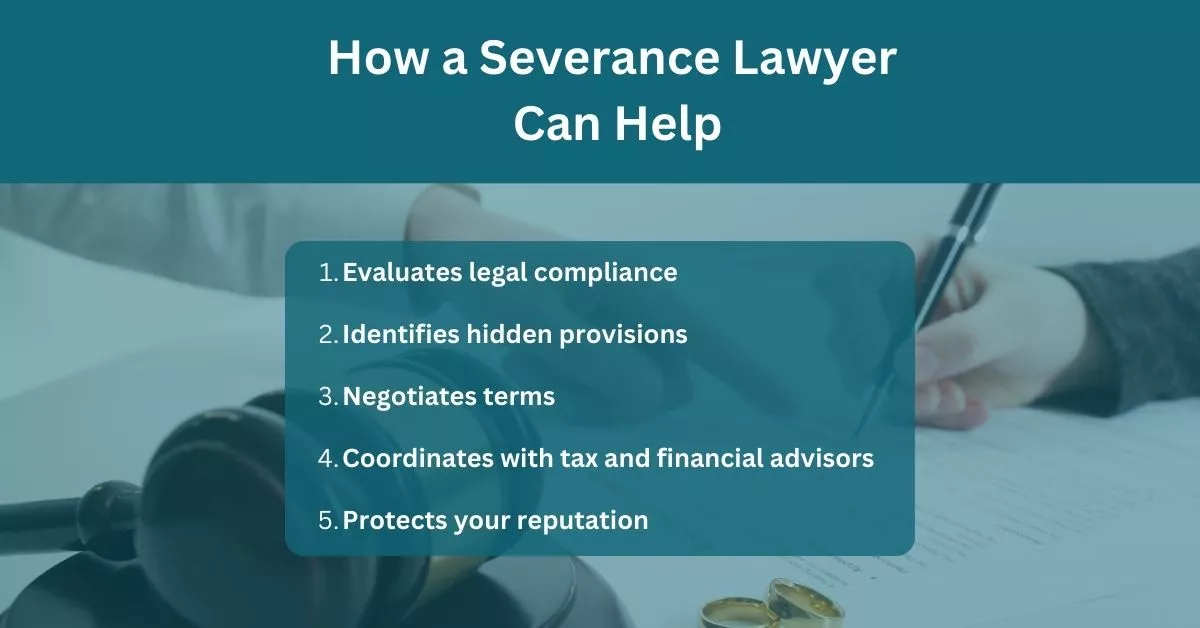
How a Severance Lawyer Can Help
Negotiating severance is a complex process that involves employment law, tax considerations, and contract law. A lawyer:
- Evaluates legal compliance: Ensures the agreement complies with Oregon and federal law. For instance, a lawyer will ensure that any nondisclosure provisions comply with the OWFA and that non‑compete clauses are reasonable.
- Identifies hidden provisions: Detects ambiguous or one‑sided clauses, such as those requiring you to indemnify the company or assign intellectual property rights.
- Negotiates terms: Advocates for better compensation, benefits, and less restrictive covenants. Lawyers understand industry norms and can push for fair treatment.
- Coordinates with tax and financial advisors: Ensures the severance structure optimizes taxes and does not trigger adverse consequences for stock options or retirement plans.
- Protects your reputation: Helps secure positive references and ensures the company doesn’t disparage you.
If you are negotiating an executive separation in Oregon, Meyer Employment Law can guide you through the process. Our team understands the unique requirements of the Oregon Workplace Fairness Act and has experience negotiating complex severance packages for senior executives.
Conclusion
Unlike wages and benefits required by statute, severance is a contractual benefit that can (and should) be negotiated. Federal law does not mandate severance pay, and Oregon requires employers only to follow established policies. However, the state’s Workplace Fairness Act grants employees significant leverage by restricting nondisclosure clauses and providing revocation rights.
By understanding your legal protections, evaluating your value, and engaging an experienced severance lawyer, you can secure a package that reflects your contributions and protects your future.
Meyer Employment Law helps executives navigate complex severance negotiations, ensuring compliance with Oregon law and maximizing compensation. Contact us if you need advice on negotiating your severance agreement.
FAQs
Do employers have to provide severance pay in Oregon?
No. There is no federal or state law requiring employers to provide severance pay. However, employers must honor any established policies or written agreements.
What is the Oregon Workplace Fairness Act?
The OWFA is a state law that prohibits employers from including nondisclosure or nondisparagement clauses related to discrimination or sexual assault in severance agreements unless requested by the employee. It also requires employers to provide a written anti‑discrimination policy and gives employees at least seven days to revoke a severance agreement.
How much severance pay should executives expect?
There is no standard amount. Some companies offer one to four weeks of pay per year of service, but executives may negotiate for more based on their contributions and the circumstances of their departure.
Can a severance agreement include a non‑compete clause?
Yes, but in Oregon non‑compete clauses must protect legitimate business interests, be reasonable in time and geographic scope, and be provided to the employee at least 30 days before enforcement. The FTC attempted to ban most non‑competes in 2024, but the rule was blocked, creating uncertainty.
Why should I consult a severance lawyer?
Because severance agreements are legally binding, an experienced lawyer can ensure compliance with state and federal law, identify hidden pitfalls, negotiate fair compensation, and protect your future employment opportunities.